📓 Chapter 5: The UK Government, the Law and Your Role
5.1.1 What is the constitution?
2 paragraphs · 4 questions
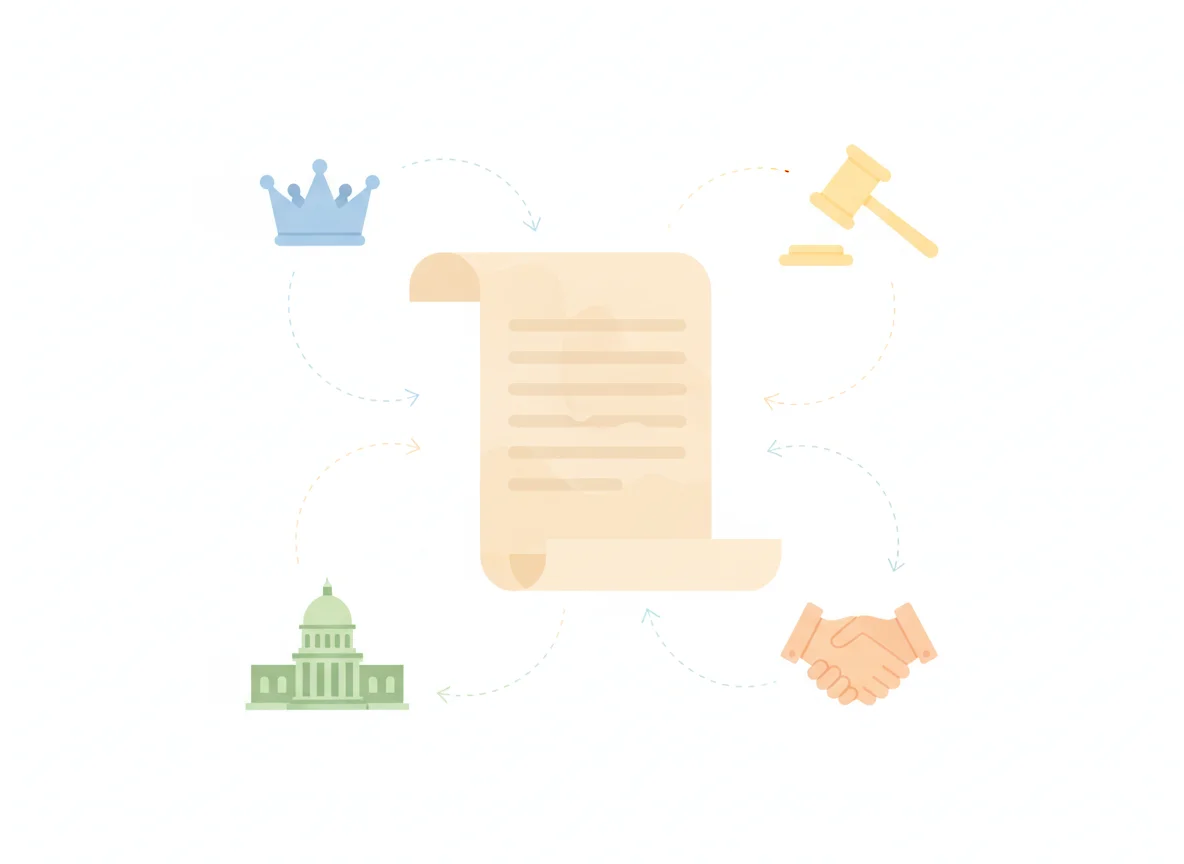
The UK does not have a single written constitution like many other countries. Instead, the constitution is made up of laws passed by Parliament (statute law), common law (developed by judges through court cases), and conventions (long-standing practices). Important constitutional documents include the Magna Carta (1215), the Bill of Rights (1689), and the Human Rights Act (1998).
Key Facts
- UK has no single written constitution
- Made up of statute law, common law, and conventions
- Key documents: Magna Carta 1215, Bill of Rights 1689, Human Rights Act 1998
The Magna Carta, signed in 1215, established the principle that even the king was subject to the law. The Bill of Rights of 1689 confirmed the rights of Parliament and limited the powers of the monarch. These documents form the foundation of the UK's constitutional arrangements and the rule of law.
Key Facts
- Magna Carta 1215 — king subject to law
- Bill of Rights 1689 — confirmed rights of Parliament, limited monarch
- Foundation of rule of law
📝 学习笔记
- UK没有单一的成文宪法。
- UK没有单一的成文宪法
- 由成文法、普通法和惯例组成
- 重要文件:Magna Carta 1215, Bill of Rights 1689, Human Rights Act 1998
- Magna Carta于1215年签署。
- UK没有单一的成文宪法
- 由成文法、普通法和惯例组成
- 重要文件:Magna Carta 1215, Bill of Rights 1689, Human Rights Act 1998
- Magna Carta确立了即使是国王也受法律约束的原则。
- UK没有单一的成文宪法
- 由成文法、普通法和惯例组成
- 重要文件:Magna Carta 1215, Bill of Rights 1689, Human Rights Act 1998
- Bill of Rights于1689年通过。
- UK没有单一的成文宪法
- 由成文法、普通法和惯例组成
- 重要文件:Magna Carta 1215, Bill of Rights 1689, Human Rights Act 1998
Advertisement