📕 Chapter 3: A Long and Illustrious History
3.6.4 Economic challenges and Thatcher's Britain
2 paragraphs · 3 questions
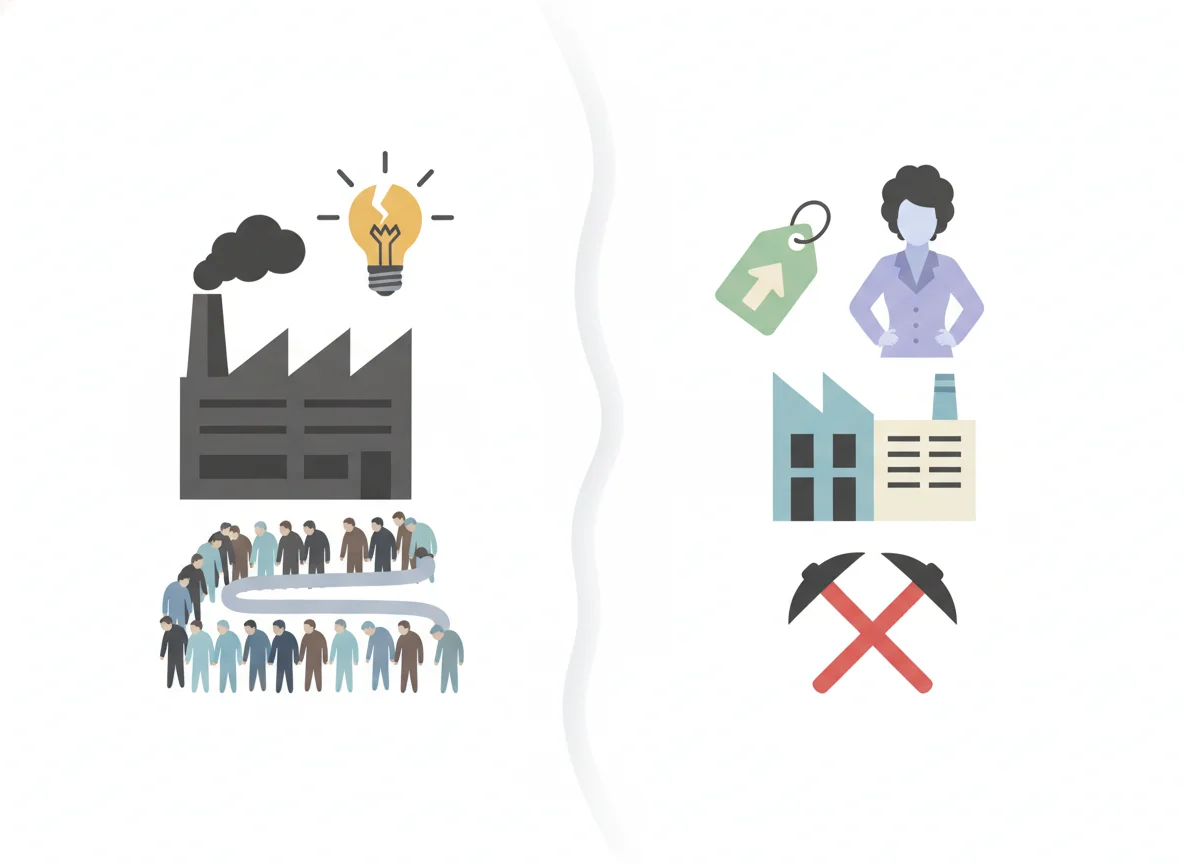
The 1970s were a difficult period economically, with high inflation, strikes, and power cuts. The 'Winter of Discontent' (1978-79) saw widespread strikes by public sector workers. In 1979, Margaret Thatcher became Britain's first female Prime Minister. She served until 1990 and introduced radical economic reforms, including privatisation of state-owned industries and reducing the power of trade unions.
Key Facts
- 1970s — high inflation, strikes, power cuts
- Margaret Thatcher — first female PM, 1979-1990
- Privatisation and reduced trade union power
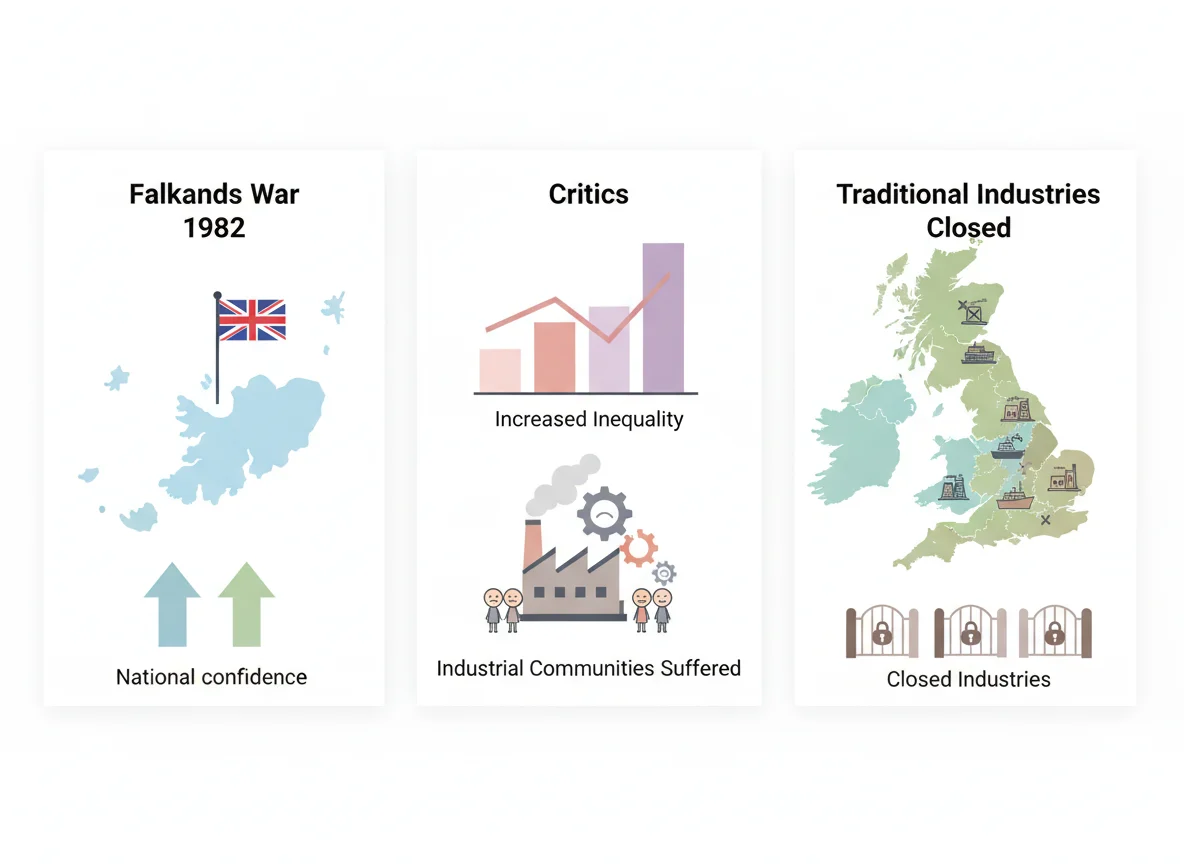
Thatcher's policies were controversial. Supporters credited her with reviving the British economy and restoring national confidence, particularly after the Falklands War of 1982. Critics argued that her policies increased inequality and caused hardship in industrial communities, particularly in northern England, Scotland, and Wales, where many traditional industries closed.
Key Facts
- Falklands War 1982 boosted national confidence
- Critics: increased inequality, industrial communities suffered
- Traditional industries closed in north England, Scotland, Wales
📝 学习笔记
- 玛格丽特·撒切尔于 1979 年成为英国首位女首相。
- 20 世纪 70 年代——高通胀、罢工、停电
- 玛格丽特·撒切尔——首位女首相,1979-1990 年
- 私有化和削弱工会权力
- “不满之冬”(1978-79 年)是公共部门工人普遍罢工的时期。
- 20 世纪 70 年代——高通胀、罢工、停电
- 玛格丽特·撒切尔——首位女首相,1979-1990 年
- 私有化和削弱工会权力
- 福克兰群岛战争是 1982 年英国与阿根廷之间关于福克兰群岛的冲突。
- 20 世纪 70 年代——高通胀、罢工、停电
- 玛格丽特·撒切尔——首位女首相,1979-1990 年
- 私有化和削弱工会权力
Advertisement