📕 Chapter 3: A Long and Illustrious History
3.6.3 Social change in the 1960s and 1970s
2 paragraphs · 3 questions
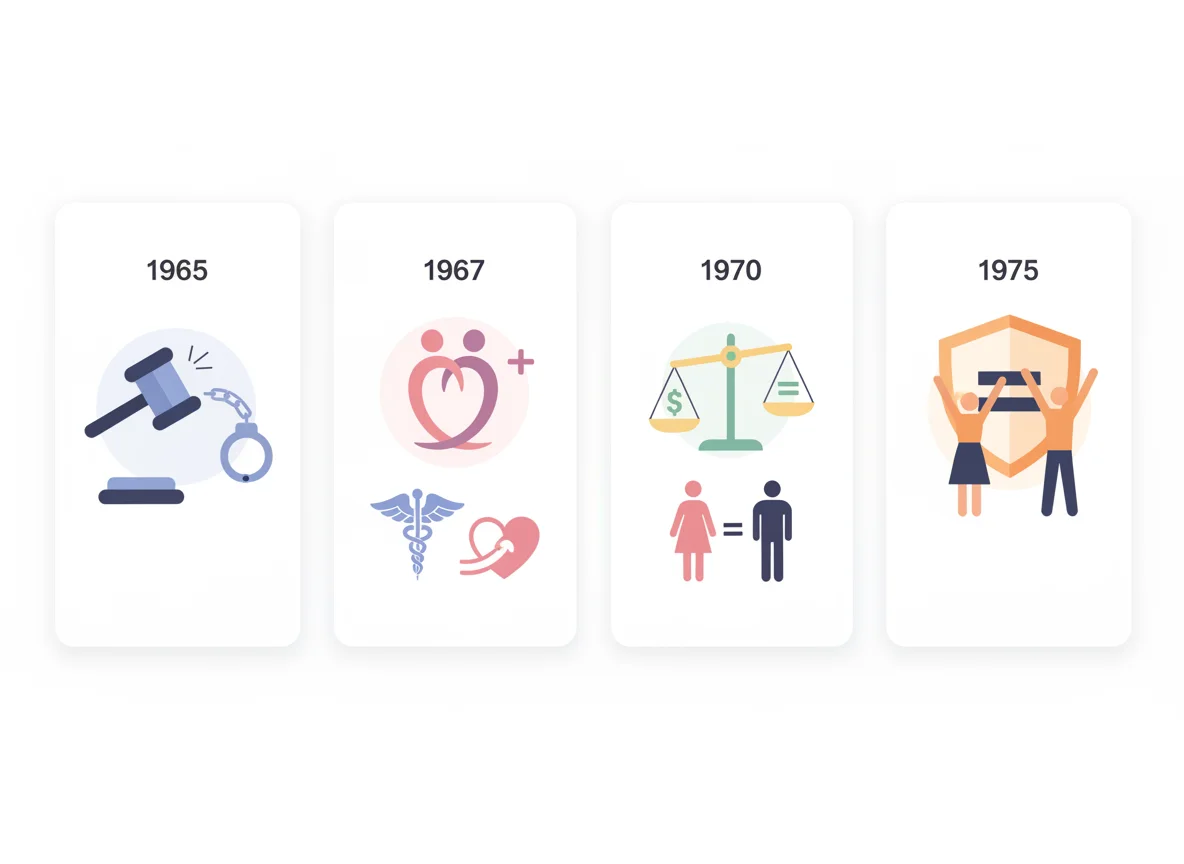
The 1960s and 1970s were a period of significant social change in Britain. Important legislation included the abolition of the death penalty (1965), the legalisation of abortion (1967), the decriminalisation of homosexuality (1967), and the Equal Pay Act (1970). The Sex Discrimination Act of 1975 made it illegal to discriminate against women in employment and education.
Key Facts
- Death penalty abolished 1965
- Abortion legalised and homosexuality decriminalised 1967
- Equal Pay Act 1970; Sex Discrimination Act 1975
The 1960s also saw a cultural revolution. British pop music, led by The Beatles and The Rolling Stones, became famous worldwide. London became a centre of fashion and culture. The 'Swinging Sixties' represented a break from the more conservative values of the post-war period. Mary Quant popularised the miniskirt, and Carnaby Street became a symbol of youth culture.
Key Facts
- Beatles and Rolling Stones — British pop music went global
- London became centre of fashion — 'Swinging Sixties'
- Mary Quant popularised the miniskirt

📝 学习笔记
- 死刑于 1965 年在英国废除。
- 死刑于 1965 年废除
- 堕胎合法化,同性恋非罪化,1967 年
- 《1970 年同工同酬法案》;《1975 年性别歧视法案》
- 《1970 年同工同酬法案》规定,无论性别,同工同酬。
- 死刑于 1965 年废除
- 堕胎合法化,同性恋非罪化,1967 年
- 《1970 年同工同酬法案》;《1975 年性别歧视法案》
- 披头士乐队是 20 世纪 60 年代英国流行音乐革命的重要组成部分。
- 死刑于 1965 年废除
- 堕胎合法化,同性恋非罪化,1967 年
- 《1970 年同工同酬法案》;《1975 年性别歧视法案》
Advertisement