📕 Chapter 3: A Long and Illustrious History
3.5.3 The partition of Ireland
2 paragraphs · 4 questions
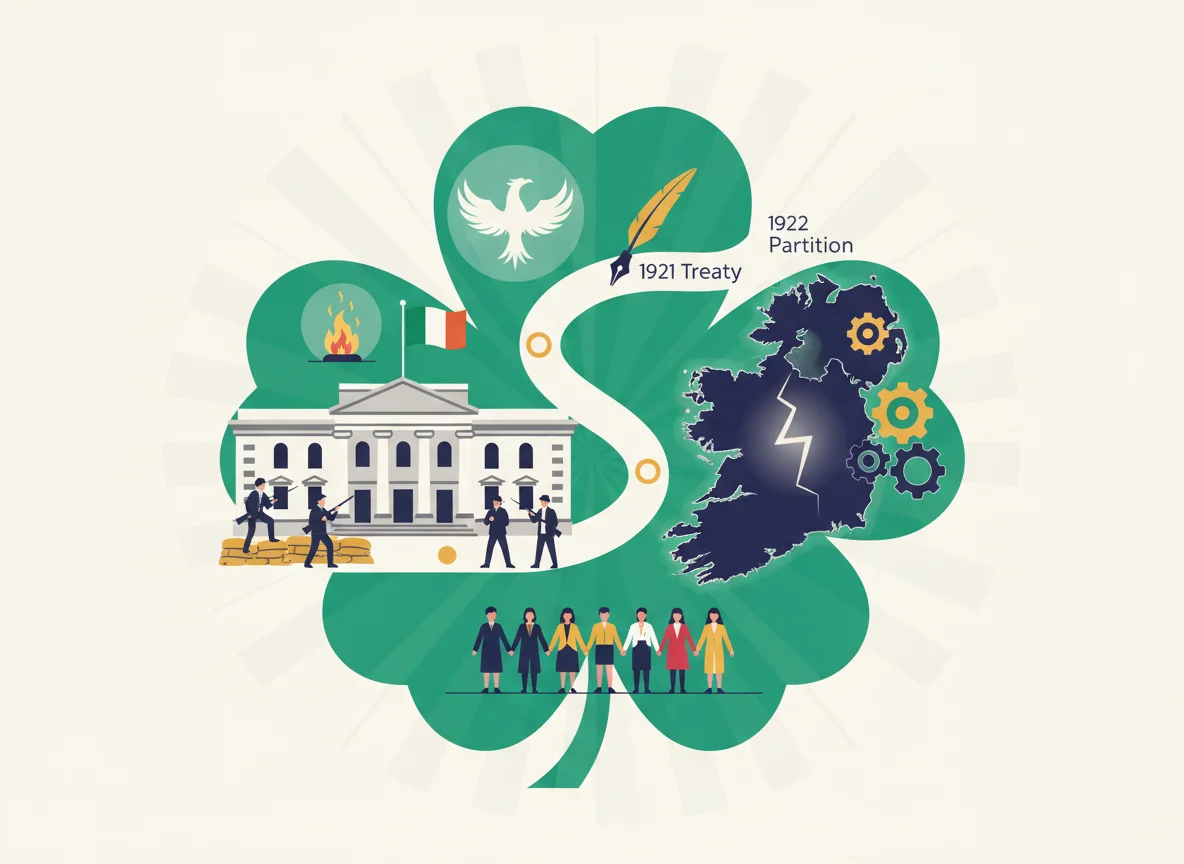
After World War I, the Irish independence movement intensified. In 1916, the Easter Rising in Dublin was an armed rebellion against British rule. Although it was quickly suppressed, it increased support for Irish independence. In 1921, a treaty was signed that led to the partition of Ireland in 1922.
Key Facts
- Easter Rising 1916 in Dublin — armed rebellion against British rule
- Quickly suppressed but increased support for independence
- Treaty signed 1921; Ireland partitioned 1922
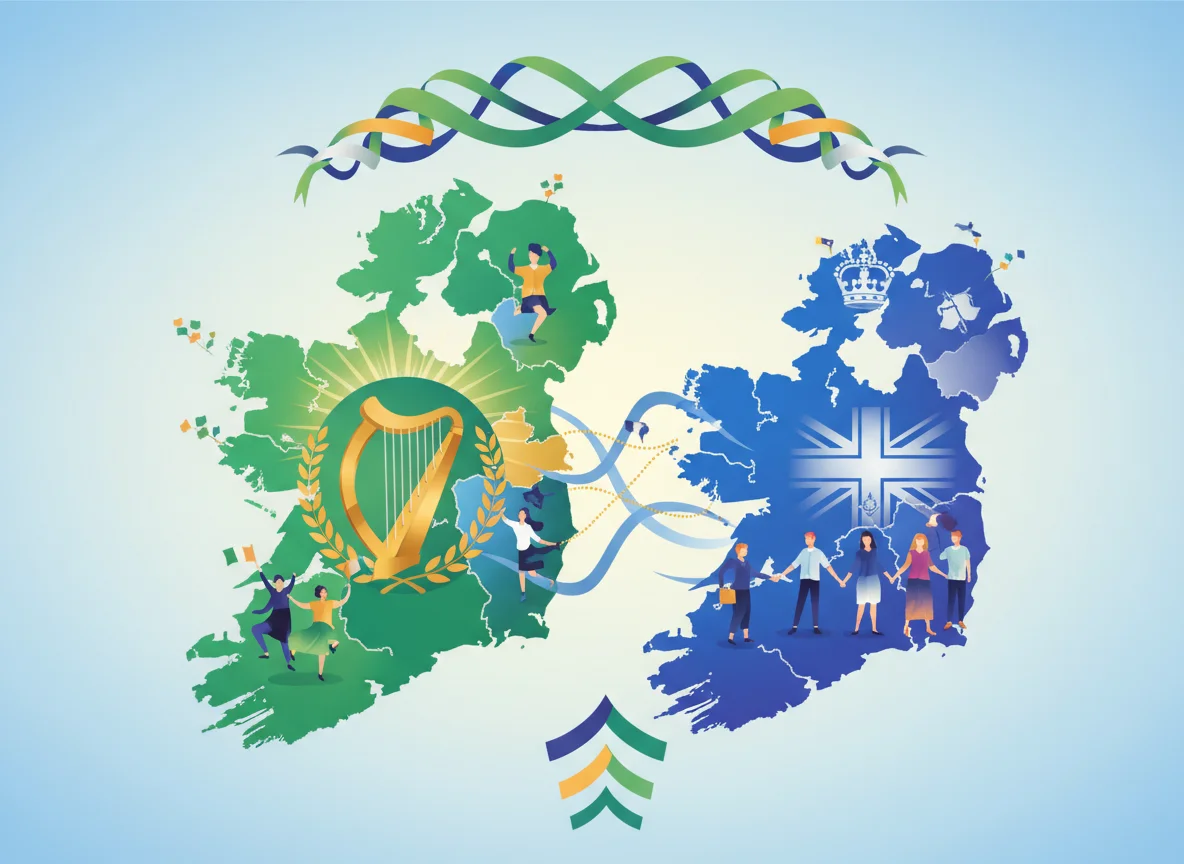
Ireland was divided into two parts: the Irish Free State (later the Republic of Ireland), which consisted of the 26 southern counties and became independent, and Northern Ireland, which consisted of 6 counties and remained part of the United Kingdom. The partition was controversial and led to decades of tension, particularly in Northern Ireland.
Key Facts
- Irish Free State — 26 southern counties, became independent
- Northern Ireland — 6 counties, remained part of UK
- Partition was controversial and led to decades of tension
📝 学习笔记
- 复活节起义是1916年在都柏林发生的一场针对英国统治的武装叛乱。
- 1916年都柏林复活节起义——针对英国统治的武装叛乱
- 迅速被镇压,但增加了对独立的 L支持
- 1921年签署条约;爱尔兰于1922年被分割
- 爱尔兰于1922年被分割。
- 1916年都柏林复活节起义——针对英国统治的武装叛乱
- 迅速被镇压,但增加了对独立的 L支持
- 1921年签署条约;爱尔兰于1922年被分割
- 北爱尔兰由6个郡组成。
- 1916年都柏林复活节起义——针对英国统治的武装叛乱
- 迅速被镇压,但增加了对独立的 L支持
- 1921年签署条约;爱尔兰于1922年被分割
- 26个南部郡成为爱尔兰自由邦,后来成为爱尔兰共和国。
- 1916年都柏林复活节起义——针对英国统治的武装叛乱
- 迅速被镇压,但增加了对独立的 L支持
- 1921年签署条约;爱尔兰于1922年被分割
Advertisement