📕 Chapter 3: A Long and Illustrious History
3.4.5 The Industrial Revolution
2 paragraphs · 4 questions
The Industrial Revolution began in Britain in the late 18th century and transformed the country from a rural, agricultural society into an urban, industrial one. New inventions such as the spinning jenny (James Hargreaves), the water frame (Richard Arkwright), and the improved steam engine (James Watt) revolutionised manufacturing, particularly the textile industry.
Key Facts
- Industrial Revolution began in Britain late 18th century
- Key inventions: spinning jenny, water frame, steam engine
- Transformed Britain from rural to urban industrial society
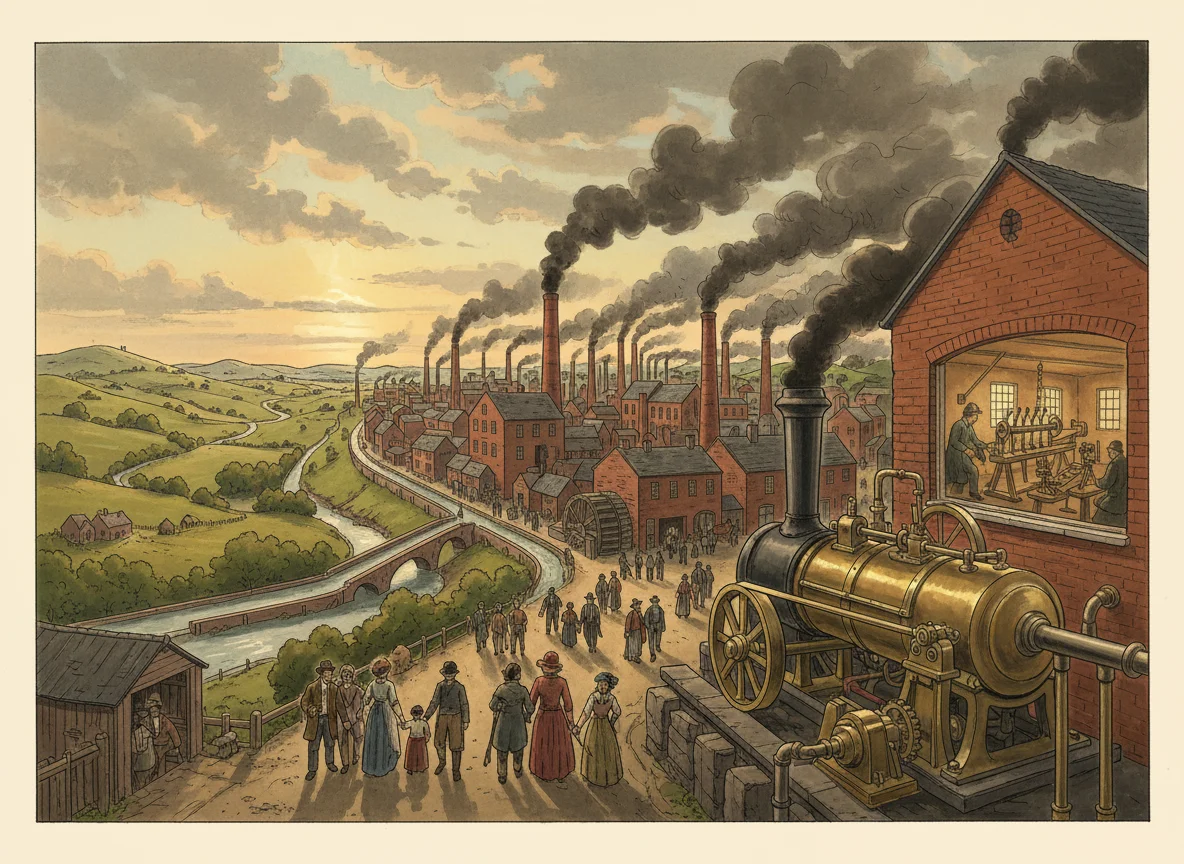
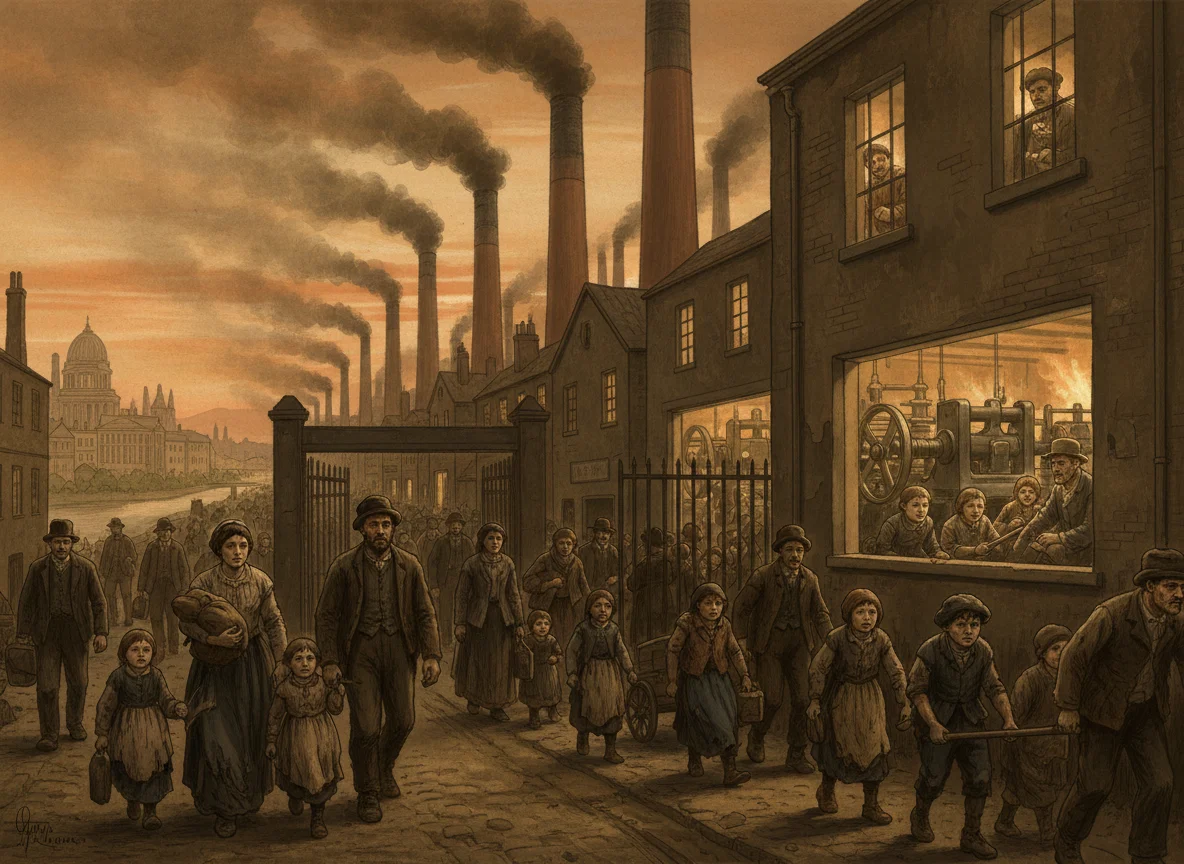
The Industrial Revolution led to massive social changes. People moved from the countryside to work in factories in growing cities like Manchester, Birmingham, and Leeds. Working conditions were often terrible, with long hours, low pay, and child labour. However, the revolution also created great wealth and made Britain the world's leading industrial and trading nation.
Key Facts
- People moved to cities for factory work
- Terrible conditions: long hours, low pay, child labour
- Made Britain world's leading industrial nation
📝 学习笔记
- Industrial Revolution 于 18 世纪末在英国开始。
- Industrial Revolution 于 18 世纪末在英国开始
- 关键发明:spinning jenny、water frame、steam engine
- 将英国从乡村社会转变为城市工业社会
- James Hargreaves 发明了 spinning jenny。
- Industrial Revolution 于 18 世纪末在英国开始
- 关键发明:spinning jenny、water frame、steam engine
- 将英国从乡村社会转变为城市工业社会
- Industrial Revolution 导致大量人口从乡村迁移到不断发展的工业城市。
- Industrial Revolution 于 18 世纪末在英国开始
- 关键发明:spinning jenny、water frame、steam engine
- 将英国从乡村社会转变为城市工业社会
- James Watt 改进了蒸汽机,这是 Industrial Revolution 的一项关键发明。
- Industrial Revolution 于 18 世纪末在英国开始
- 关键发明:spinning jenny、water frame、steam engine
- 将英国从乡村社会转变为城市工业社会
Advertisement