📕 Chapter 3: A Long and Illustrious History
3.4.12 The development of democracy and voting rights
2 paragraphs · 3 questions
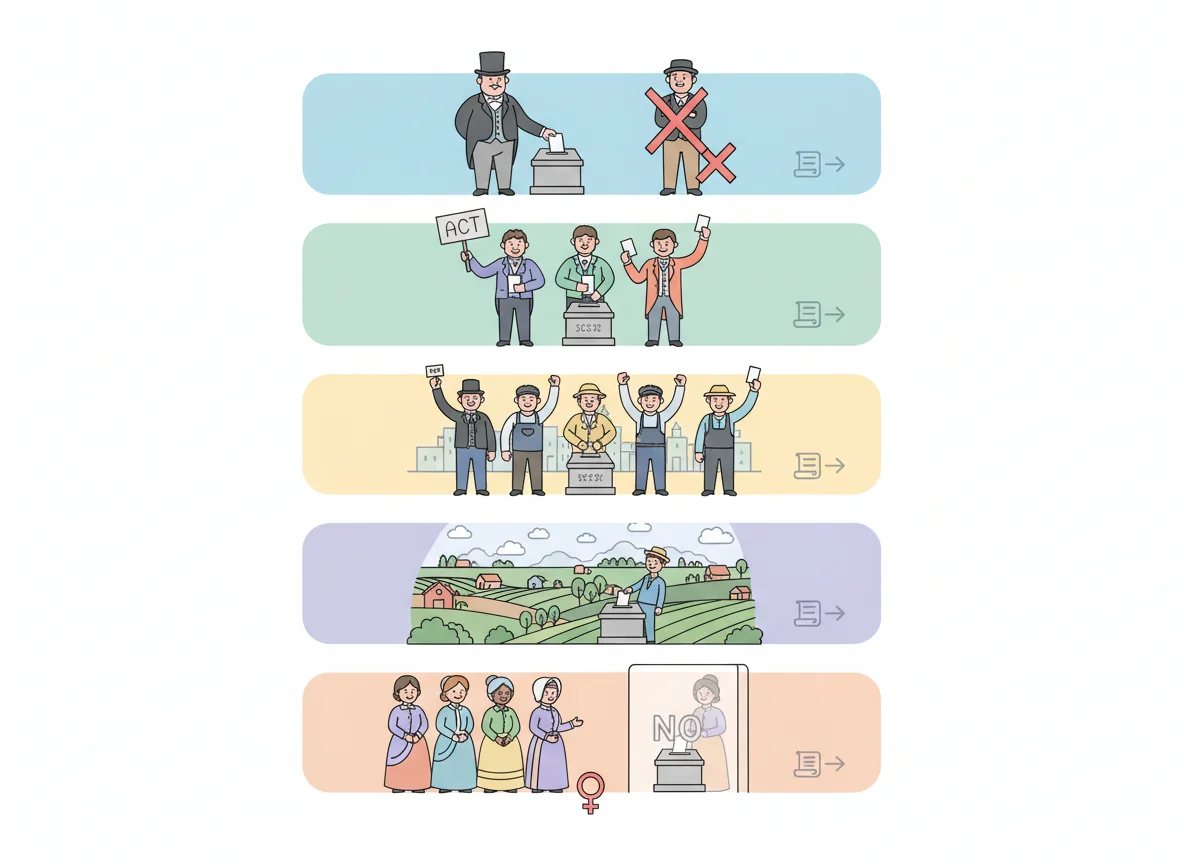
Throughout the 19th century, the right to vote was gradually extended. Before the Reform Act of 1832, only a small number of wealthy men could vote. The 1832 Act gave the vote to more middle-class men. The 1867 Act extended it to many working-class men in towns. The 1884 Act gave the vote to most men in the countryside. However, women and the poorest men were still excluded.
Key Facts
- Before 1832 only wealthy men could vote
- 1832 Act — middle-class men; 1867 — working-class men in towns
- 1884 — most men in countryside; women still excluded
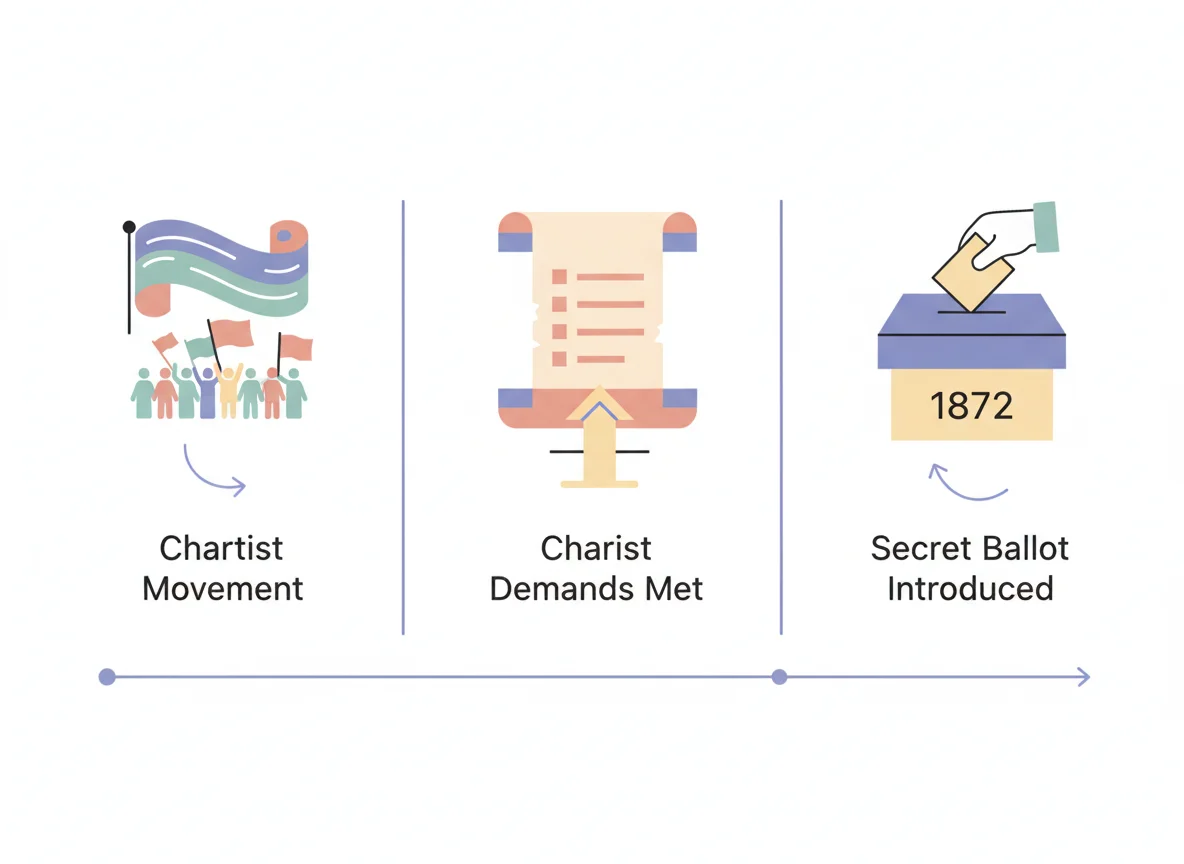
Other important democratic reforms included the introduction of the secret ballot in 1872, which meant people could vote without others knowing their choice. The Chartist movement of the 1830s and 1840s campaigned for democratic reforms including votes for all men, secret ballots, and equal-sized constituencies. Although the Chartists were not immediately successful, most of their demands were eventually met.
Key Facts
- Secret ballot introduced 1872
- Chartist movement 1830s-1840s campaigned for democratic reforms
- Most Chartist demands eventually met
📝 学习笔记
- 秘密投票于 1872 年引入。
- 1832年前,只有富裕男性才能投票
- 1832年法案——中产阶级男性;1867年——城镇工人阶级男性
- 1884年——乡村地区多数男性;女性仍被排除在外
- Chartists运动旨在推动民主改革,包括所有男性享有投票权和秘密投票。
- 1832年前,只有富裕男性才能投票
- 1832年法案——中产阶级男性;1867年——城镇工人阶级男性
- 1884年——乡村地区多数男性;女性仍被排除在外
- 1867年改革法案将投票权扩大到许多城镇工人阶级男性。
- 1832年前,只有富裕男性才能投票
- 1832年法案——中产阶级男性;1867年——城镇工人阶级男性
- 1884年——乡村地区多数男性;女性仍被排除在外
Advertisement