📕 Chapter 3: A Long and Illustrious History
3.3.12 The Bill of Rights 1689
2 paragraphs · 4 questions
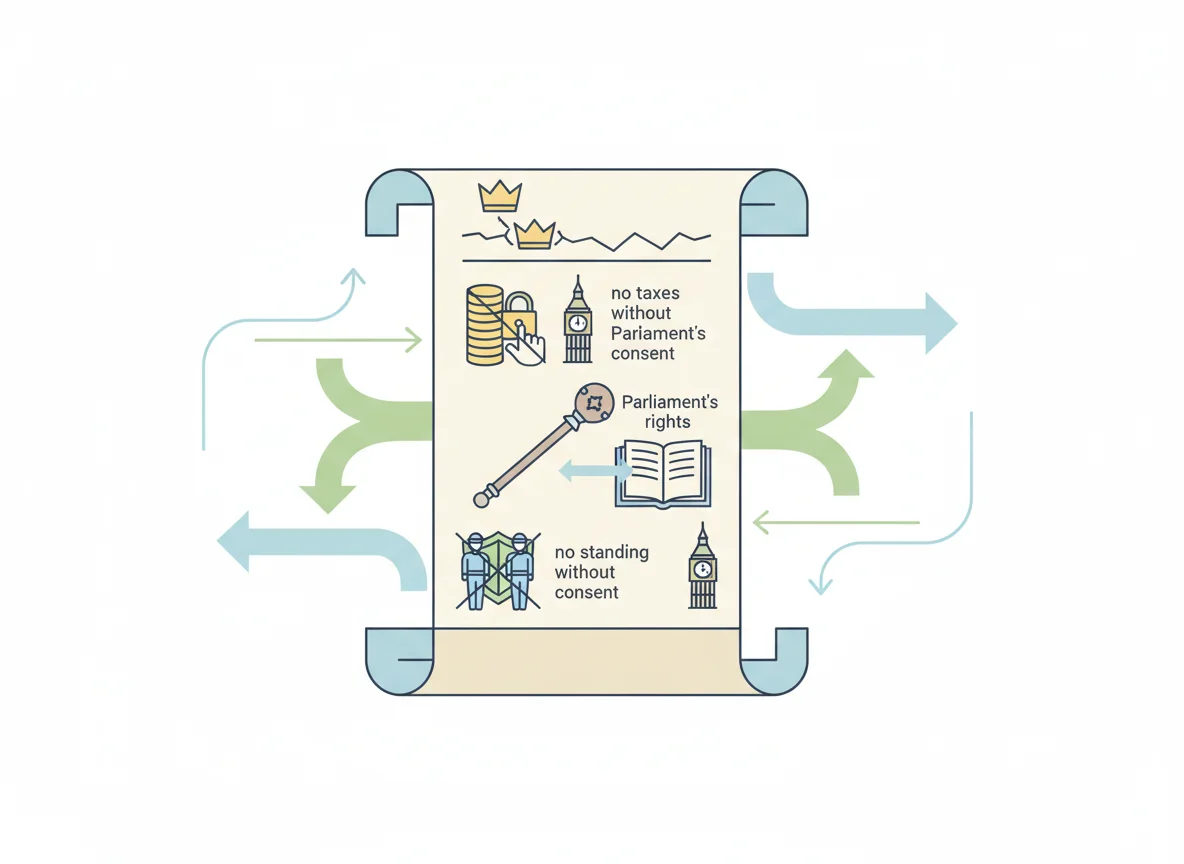
In 1689, Parliament passed the Bill of Rights, which confirmed the rights established by the Glorious Revolution. The Bill of Rights limited the power of the monarch and set out the rights of Parliament. Key provisions included: the monarch could not raise taxes or maintain a standing army without Parliament's consent, and elections to Parliament should be free.
Key Facts
- Bill of Rights passed 1689
- Limited monarch's power, set out Parliament's rights
- Monarch cannot raise taxes or keep army without Parliament's consent
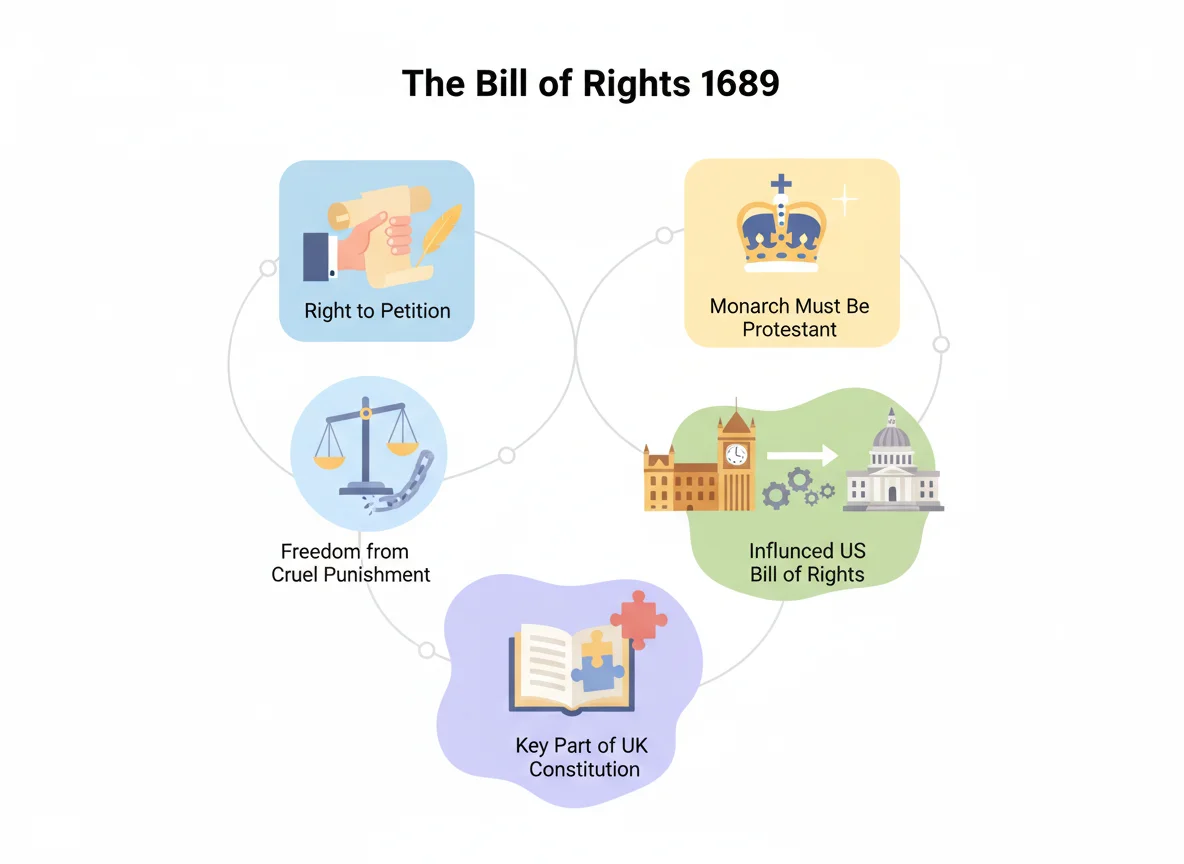
The Bill of Rights also guaranteed certain individual rights, including the right to petition the monarch and freedom from cruel and unusual punishment. It established that the monarch must be Protestant. Together with the Magna Carta, the Bill of Rights forms a key part of the UK's constitutional framework and influenced later documents such as the US Bill of Rights.
Key Facts
- Guaranteed right to petition and freedom from cruel punishment
- Monarch must be Protestant
- Influenced US Bill of Rights; key part of UK constitution
📝 学习笔记
- Bill of Rights 于1689年通过。
- Bill of Rights 于1689年通过。
- 限制了君主的权力,明确了 Parliament 的权利。
- 未经 Parliament 同意,君主不得征税或维持军队。
- Bill of Rights 限制了君主的权力,并明确了 Parliament 的权利。
- Bill of Rights 于1689年通过。
- 限制了君主的权力,明确了 Parliament 的权利。
- 未经 Parliament 同意,君主不得征税或维持军队。
- Bill of Rights 确立了君主必须是新教徒。
- Bill of Rights 于1689年通过。
- 限制了君主的权力,明确了 Parliament 的权利。
- 未经 Parliament 同意,君主不得征税或维持军队。
- 1689年的 Bill of Rights 影响了后来的文件,例如美国的 Bill of Rights。
- Bill of Rights 于1689年通过。
- 限制了君主的权力,明确了 Parliament 的权利。
- 未经 Parliament 同意,君主不得征税或维持军队。
Advertisement