📕 Chapter 3: A Long and Illustrious History
3.2.5 The Peasants' Revolt 1381
2 paragraphs · 4 questions
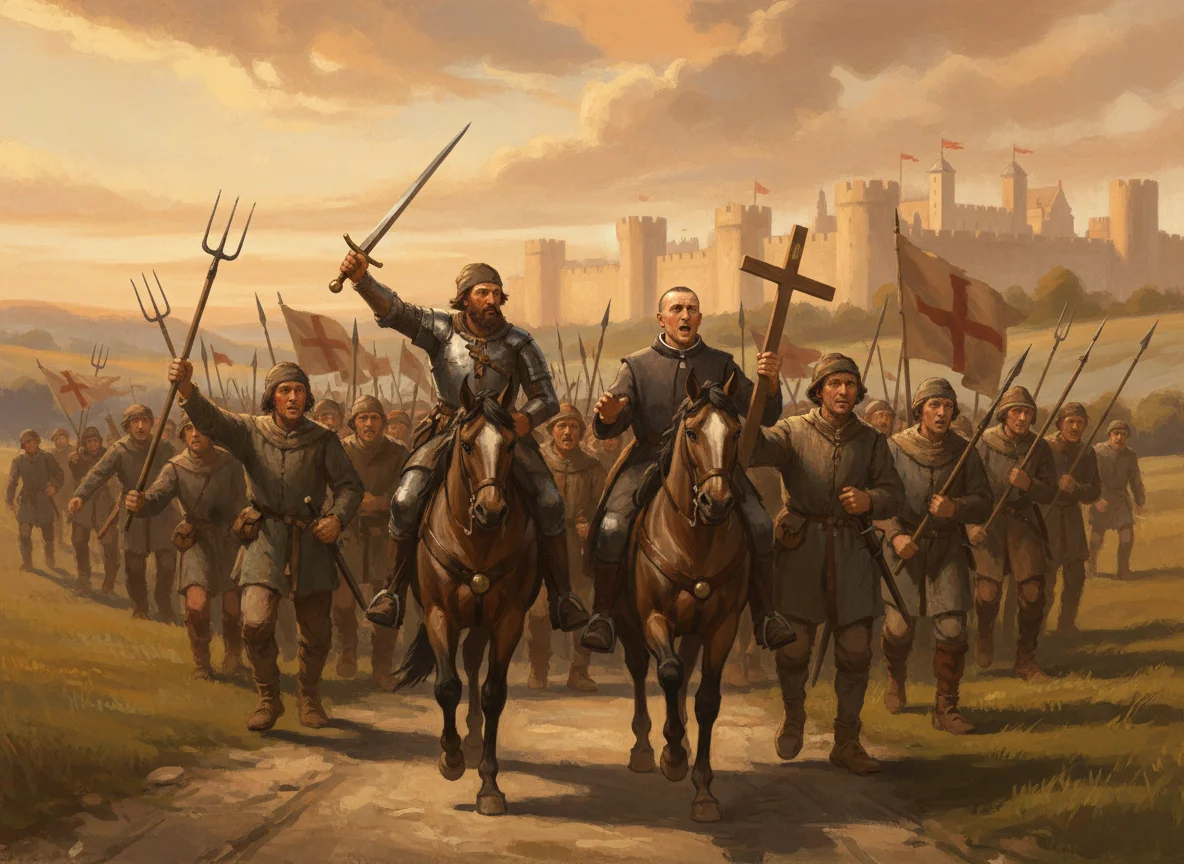
In 1381, the Peasants' Revolt broke out in England. It was triggered by the introduction of a new poll tax that everyone had to pay, regardless of wealth. The revolt was led by Wat Tyler and John Ball. Thousands of peasants marched on London, demanding an end to serfdom and fairer treatment.
Key Facts
- Peasants' Revolt in 1381 triggered by poll tax
- Led by Wat Tyler and John Ball
- Peasants marched on London demanding end to serfdom
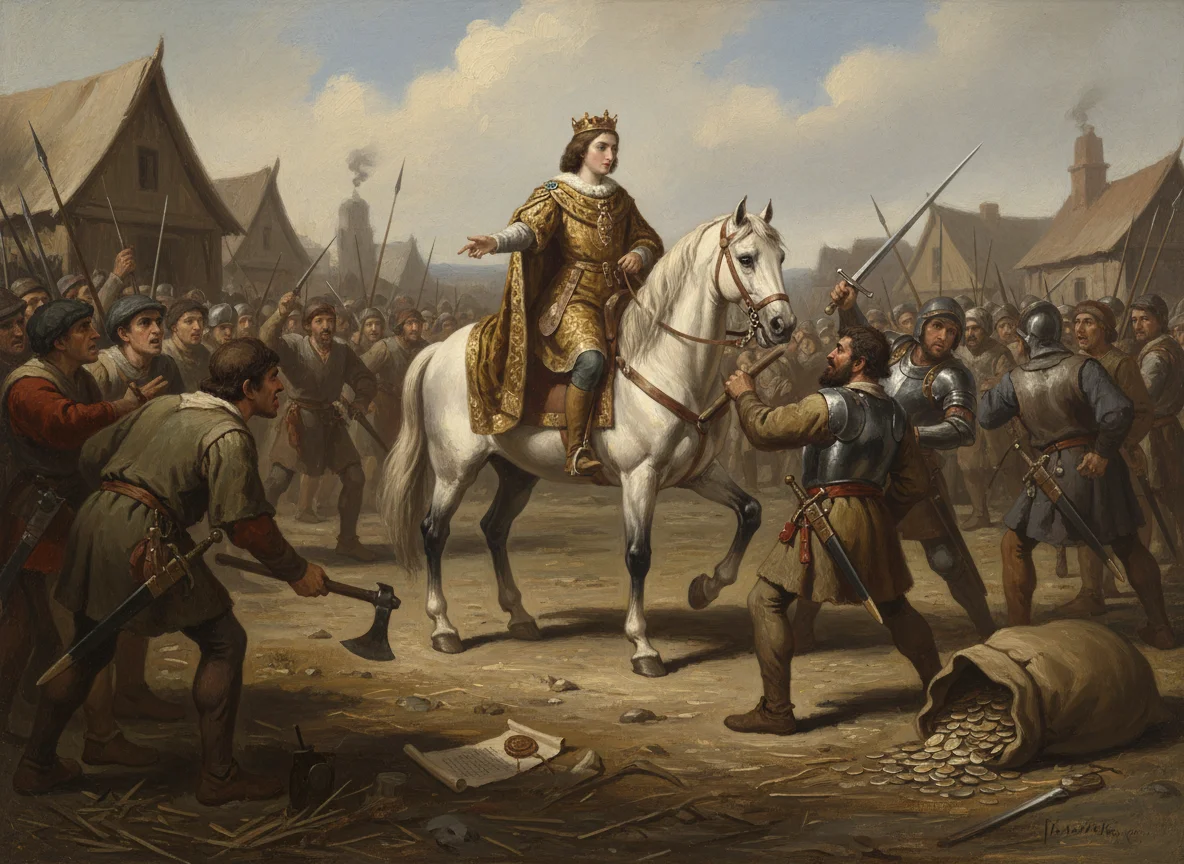
The young King Richard II met the rebels at Smithfield in London. During the meeting, Wat Tyler was killed. Richard promised to meet the peasants' demands, but after they dispersed, he broke his promises and the leaders were executed. Despite its failure, the Peasants' Revolt showed that ordinary people could challenge authority, and the poll tax was eventually abandoned.
Key Facts
- Richard II met rebels at Smithfield
- Wat Tyler was killed; Richard broke his promises
- Poll tax was eventually abandoned
📝 学习笔记
- 农民起义是由新的普通人头税的引入引发的。
- 1381 年的农民起义由普通人头税引发
- 由 Wat Tyler 和 John Ball 领导
- 农民进军伦敦,要求废除农奴制
- 农民起义由 Wat Tyler 和 John Ball 领导。
- 1381 年的农民起义由普通人头税引发
- 由 Wat Tyler 和 John Ball 领导
- 农民进军伦敦,要求废除农奴制
- 年轻的国王 Richard II 在伦敦的 Smithfield 会见了叛乱者。
- 1381 年的农民起义由普通人头税引发
- 由 Wat Tyler 和 John Ball 领导
- 农民进军伦敦,要求废除农奴制
- 农民解散后,Richard II 违背了他的承诺,领导者被处决。
- 1381 年的农民起义由普通人头税引发
- 由 Wat Tyler 和 John Ball 领导
- 农民进军伦敦,要求废除农奴制
Advertisement