📕 Chapter 3: A Long and Illustrious History
3.6.3 Social change in the 1960s and 1970s
2 paragraphs · 3 questions
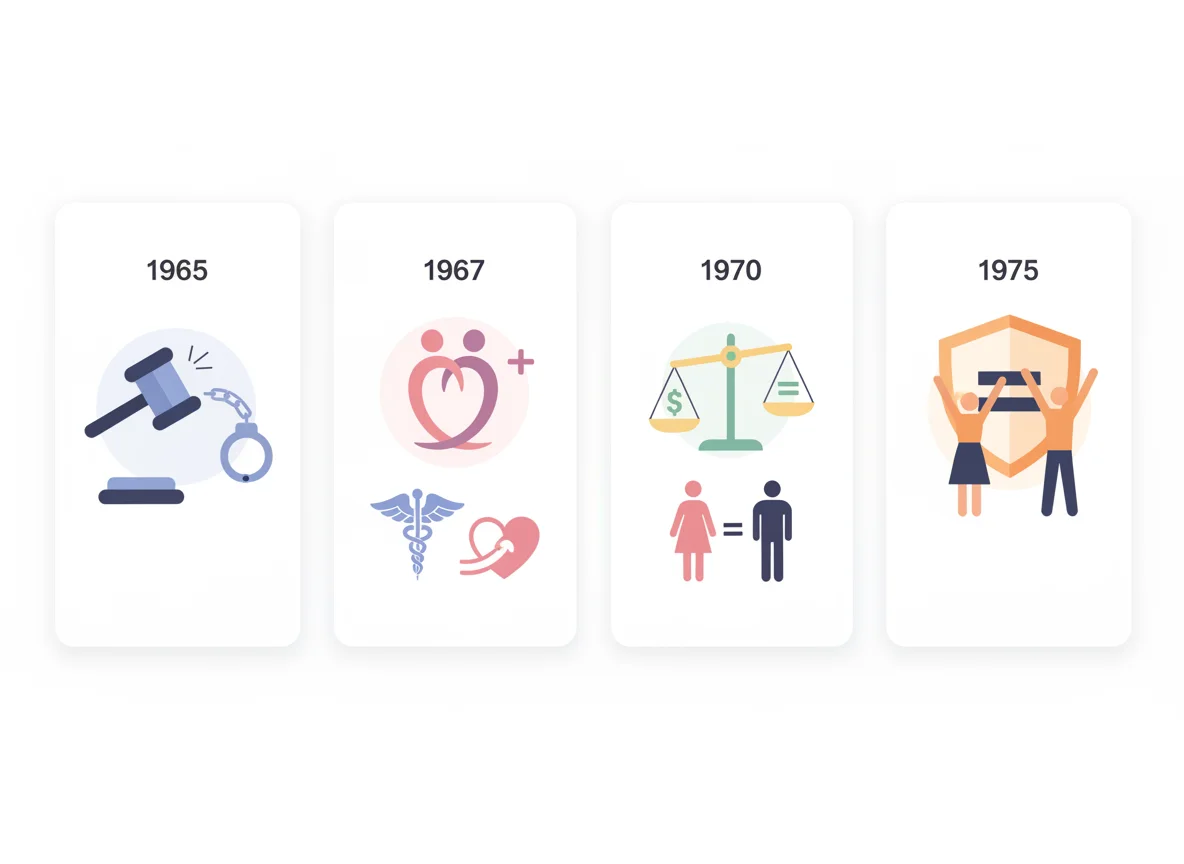
The 1960s and 1970s were a period of significant social change in Britain. Important legislation included the abolition of the death penalty (1965), the legalisation of abortion (1967), the decriminalisation of homosexuality (1967), and the Equal Pay Act (1970). The Sex Discrimination Act of 1975 made it illegal to discriminate against women in employment and education.
Key Facts
- Death penalty abolished 1965
- Abortion legalised and homosexuality decriminalised 1967
- Equal Pay Act 1970; Sex Discrimination Act 1975
The 1960s also saw a cultural revolution. British pop music, led by The Beatles and The Rolling Stones, became famous worldwide. London became a centre of fashion and culture. The 'Swinging Sixties' represented a break from the more conservative values of the post-war period. Mary Quant popularised the miniskirt, and Carnaby Street became a symbol of youth culture.
Key Facts
- Beatles and Rolling Stones — British pop music went global
- London became centre of fashion — 'Swinging Sixties'
- Mary Quant popularised the miniskirt

📝 ملاحظات الدراسة
- Britain میں سزائے موت 1965 میں ختم کر دی گئی۔
- سزائے موت 1965 میں ختم کی گئی۔
- اسقاط حمل کو قانونی قرار دیا گیا اور ہم جنس پرستی کو 1967 میں جرم کے زمرے سے نکال دیا گیا۔
- Equal Pay Act 1970؛ Sex Discrimination Act 1975
- 1970 کے Equal Pay Act کے تحت جنس سے قطع نظر، مساوی کام کے لیے مساوی تنخواہ لازمی قرار دی گئی۔
- سزائے موت 1965 میں ختم کی گئی۔
- اسقاط حمل کو قانونی قرار دیا گیا اور ہم جنس پرستی کو 1967 میں جرم کے زمرے سے نکال دیا گیا۔
- Equal Pay Act 1970؛ Sex Discrimination Act 1975
- The Beatles 1960 کی دہائی کی British پاپ موسیقی کے انقلاب کا ایک اہم حصہ تھے۔
- سزائے موت 1965 میں ختم کی گئی۔
- اسقاط حمل کو قانونی قرار دیا گیا اور ہم جنس پرستی کو 1967 میں جرم کے زمرے سے نکال دیا گیا۔
- Equal Pay Act 1970؛ Sex Discrimination Act 1975
Advertisement