📕 Chapter 3: A Long and Illustrious History
3.4.12 The development of democracy and voting rights
2 paragraphs · 3 questions
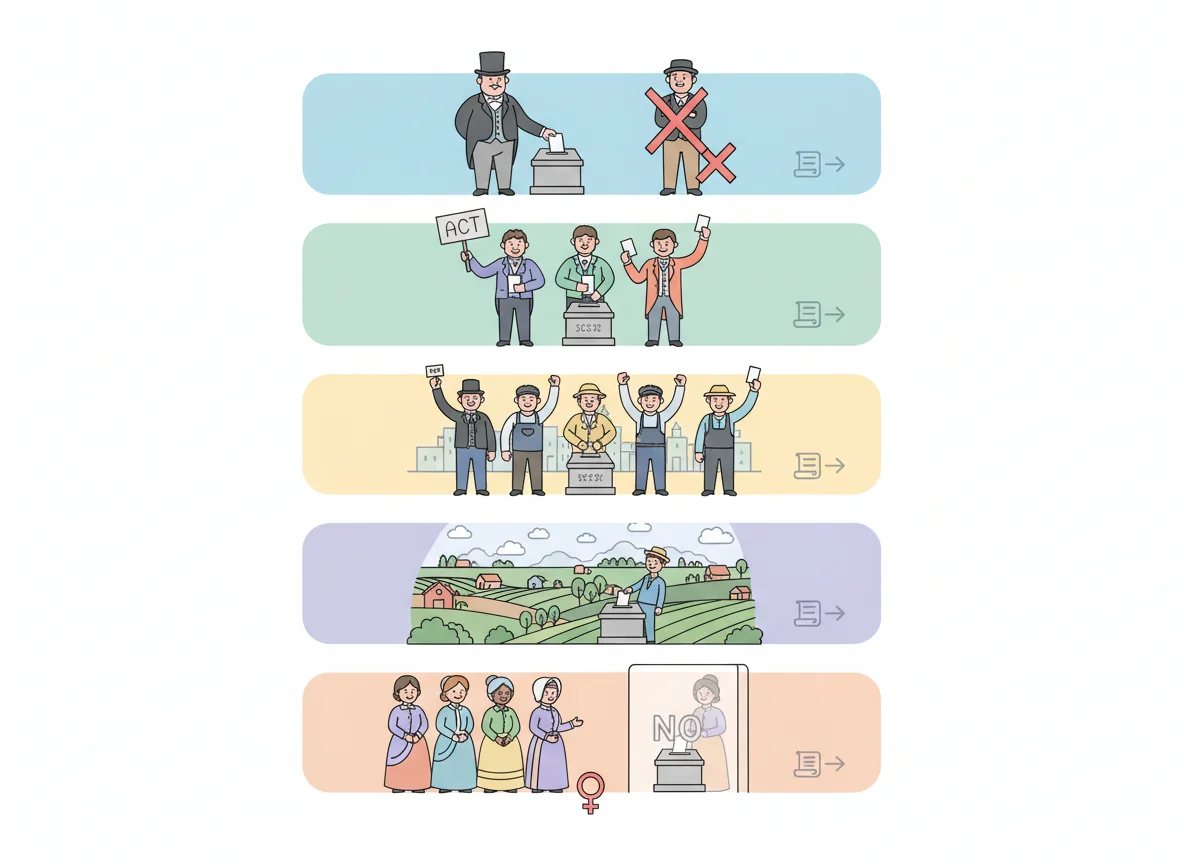
Throughout the 19th century, the right to vote was gradually extended. Before the Reform Act of 1832, only a small number of wealthy men could vote. The 1832 Act gave the vote to more middle-class men. The 1867 Act extended it to many working-class men in towns. The 1884 Act gave the vote to most men in the countryside. However, women and the poorest men were still excluded.
Key Facts
- Before 1832 only wealthy men could vote
- 1832 Act — middle-class men; 1867 — working-class men in towns
- 1884 — most men in countryside; women still excluded
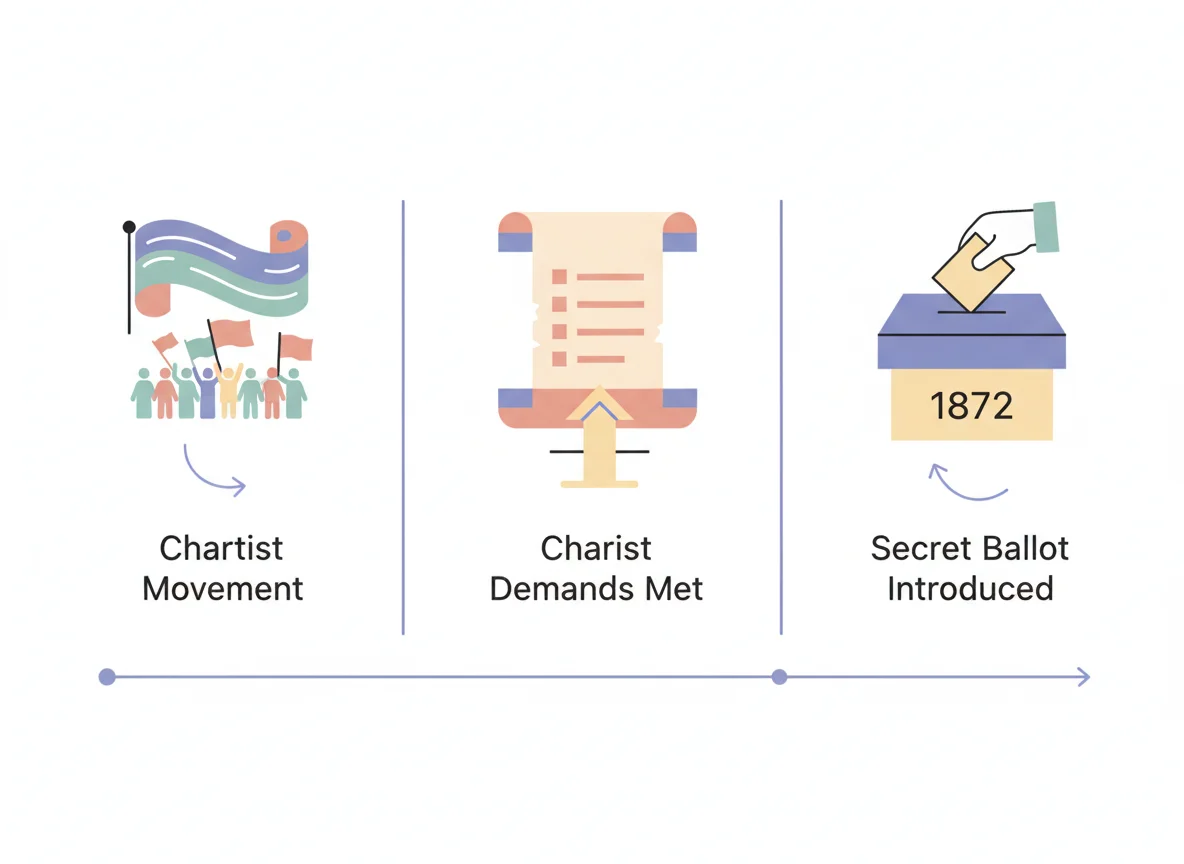
Other important democratic reforms included the introduction of the secret ballot in 1872, which meant people could vote without others knowing their choice. The Chartist movement of the 1830s and 1840s campaigned for democratic reforms including votes for all men, secret ballots, and equal-sized constituencies. Although the Chartists were not immediately successful, most of their demands were eventually met.
Key Facts
- Secret ballot introduced 1872
- Chartist movement 1830s-1840s campaigned for democratic reforms
- Most Chartist demands eventually met
📝 ملاحظات الدراسة
- خفیہ ووٹنگ کا نظام 1872 میں متعارف کرایا گیا۔
- 1832 سے پہلے صرف امیر مرد ووٹ دے سکتے تھے
- 1832 کا قانون — متوسط طبقے کے مرد؛ 1867 — قصبوں میں محنت کش طبقے کے مرد
- 1884 — دیہی علاقوں میں زیادہ تر مرد؛ خواتین کو اب بھی خارج کیا گیا
- Chartists نے جمہوری اصلاحات کے لیے مہم چلائی جن میں تمام مردوں کے لیے ووٹ اور خفیہ بیلٹ شامل تھے۔
- 1832 سے پہلے صرف امیر مرد ووٹ دے سکتے تھے
- 1832 کا قانون — متوسط طبقے کے مرد؛ 1867 — قصبوں میں محنت کش طبقے کے مرد
- 1884 — دیہی علاقوں میں زیادہ تر مرد؛ خواتین کو اب بھی خارج کیا گیا
- 1867 کے Reform Act نے قصبوں میں بہت سے محنت کش طبقے کے مردوں کو ووٹ کا حق دیا۔
- 1832 سے پہلے صرف امیر مرد ووٹ دے سکتے تھے
- 1832 کا قانون — متوسط طبقے کے مرد؛ 1867 — قصبوں میں محنت کش طبقے کے مرد
- 1884 — دیہی علاقوں میں زیادہ تر مرد؛ خواتین کو اب بھی خارج کیا گیا
Advertisement