📕 Chapter 3: A Long and Illustrious History
3.6.4 Economic challenges and Thatcher's Britain
2 paragraphs · 3 questions
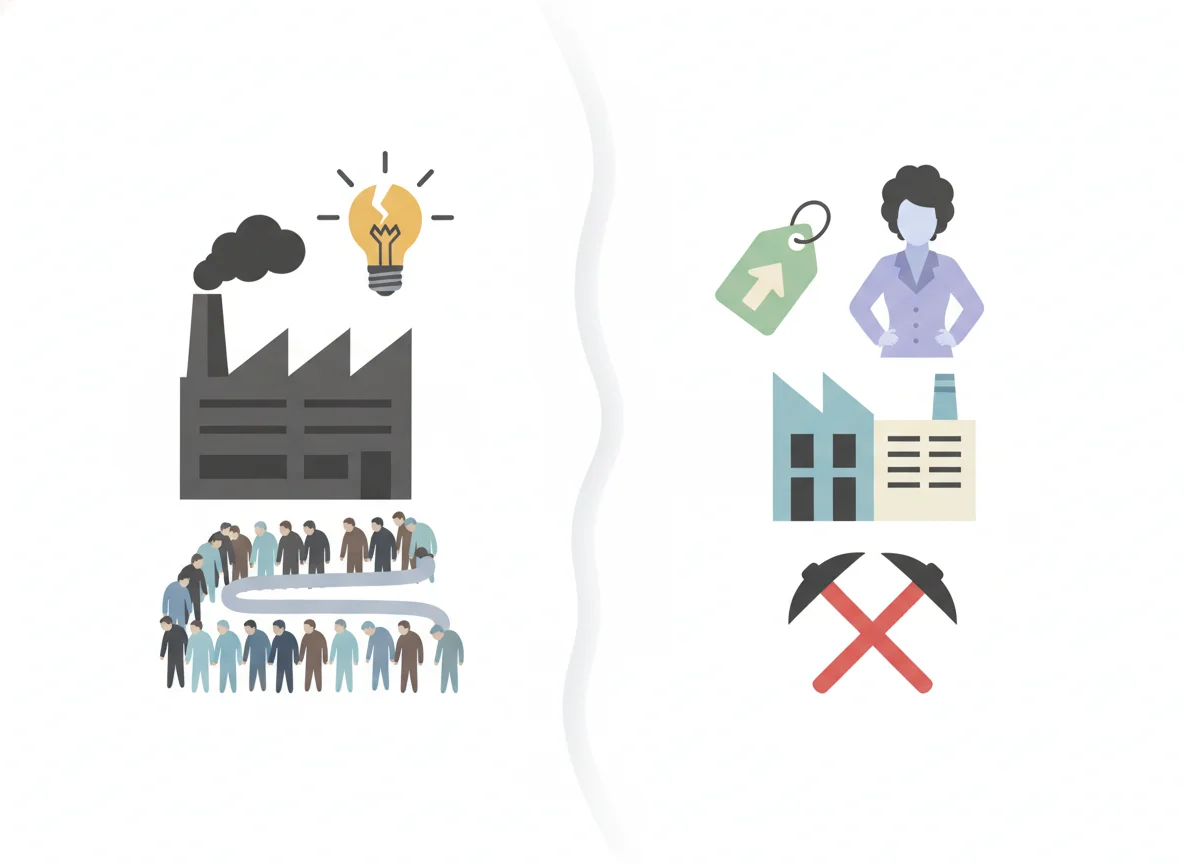
The 1970s were a difficult period economically, with high inflation, strikes, and power cuts. The 'Winter of Discontent' (1978-79) saw widespread strikes by public sector workers. In 1979, Margaret Thatcher became Britain's first female Prime Minister. She served until 1990 and introduced radical economic reforms, including privatisation of state-owned industries and reducing the power of trade unions.
Key Facts
- 1970s — high inflation, strikes, power cuts
- Margaret Thatcher — first female PM, 1979-1990
- Privatisation and reduced trade union power
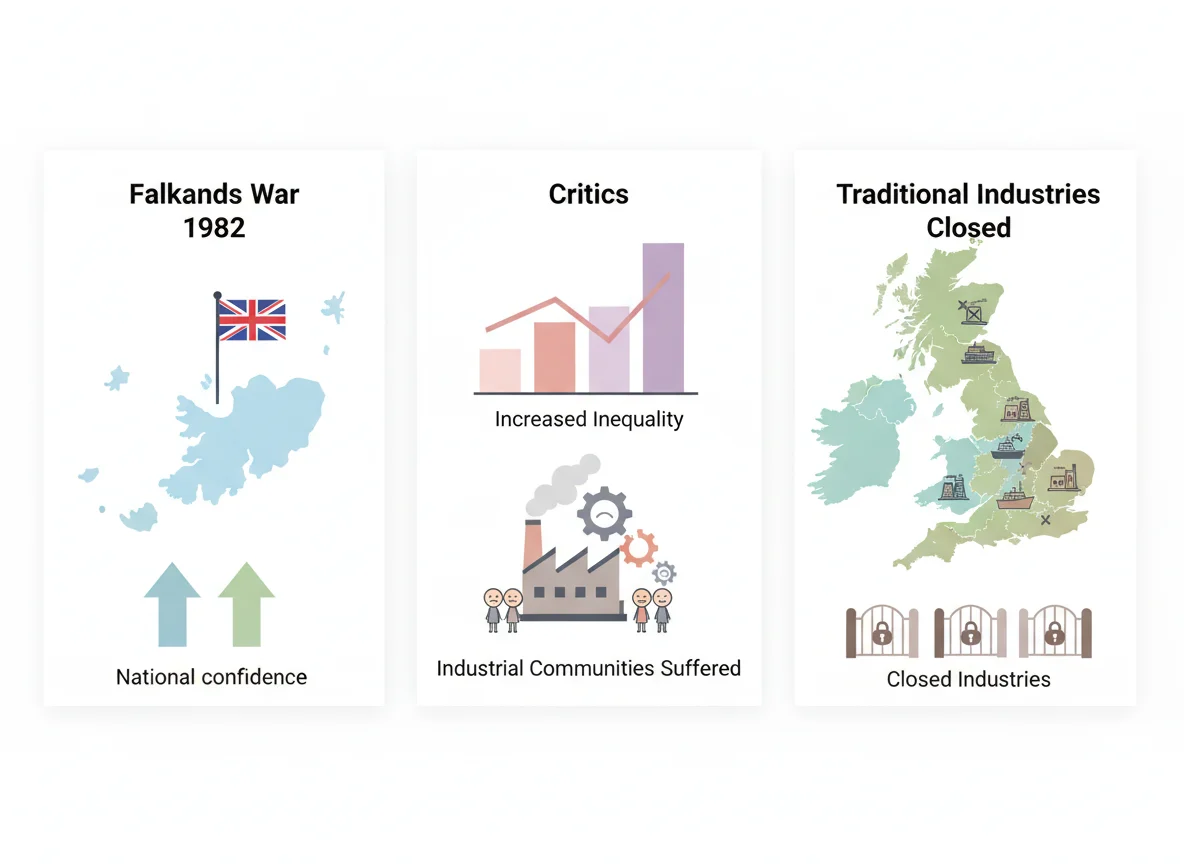
Thatcher's policies were controversial. Supporters credited her with reviving the British economy and restoring national confidence, particularly after the Falklands War of 1982. Critics argued that her policies increased inequality and caused hardship in industrial communities, particularly in northern England, Scotland, and Wales, where many traditional industries closed.
Key Facts
- Falklands War 1982 boosted national confidence
- Critics: increased inequality, industrial communities suffered
- Traditional industries closed in north England, Scotland, Wales
📝 Нотатки для навчання
- Маргарет Тетчер стала першою жінкою-прем'єр-міністром Великобританії у 1979 році.
- 1970-ті — висока інфляція, страйки, відключення електрики
- Маргарет Тетчер — перша жінка-прем'єр-міністр, 1979–1990 рр.
- Приватизація та зменшення впливу профспілок
- «Зима невдоволення» (1978–79) — період масових страйків працівників державного сектору.
- 1970-ті — висока інфляція, страйки, відключення електрики
- Маргарет Тетчер — перша жінка-прем'єр-міністр, 1979–1990 рр.
- Приватизація та зменшення впливу профспілок
- Фолклендська війна — конфлікт з Аргентиною за Фолклендські острови у 1982 році.
- 1970-ті — висока інфляція, страйки, відключення електрики
- Маргарет Тетчер — перша жінка-прем'єр-міністр, 1979–1990 рр.
- Приватизація та зменшення впливу профспілок
Реклама