📕 Chapter 3: A Long and Illustrious History
3.5.5 World War II
3 paragraphs · 5 questions
World War II began in 1939 when Germany, led by Adolf Hitler, invaded Poland. Britain and France declared war on Germany. Winston Churchill became Prime Minister in 1940 and led Britain through the war with inspiring speeches and determined leadership. His famous speeches included 'We shall fight on the beaches' and 'Never in the field of human conflict was so much owed by so many to so few'.
Key Facts
- WWII began 1939 when Germany invaded Poland
- Winston Churchill became PM 1940
- Famous speeches: 'fight on the beaches', 'so much owed by so many to so few'
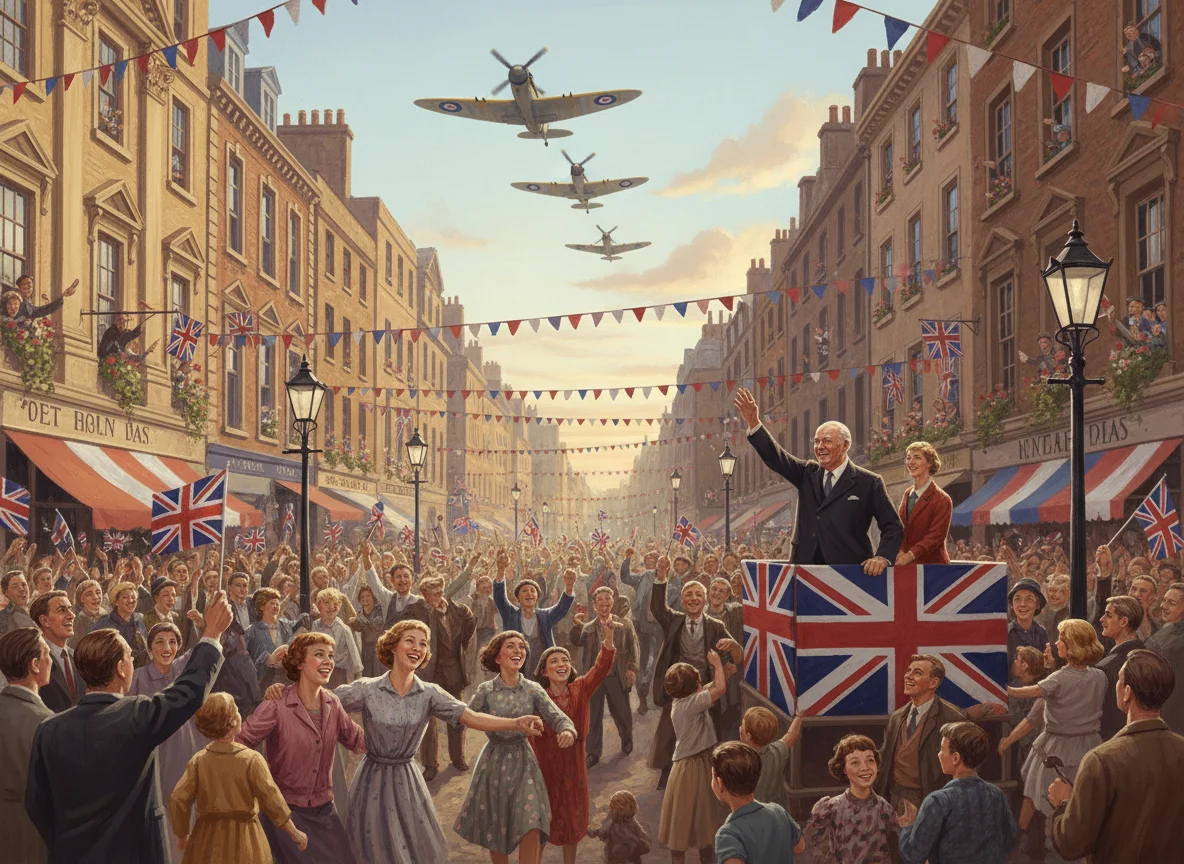
During the war, Britain faced the Blitz — sustained bombing of British cities by the German air force (Luftwaffe). London and other cities suffered heavy damage. The Battle of Britain (1940) was a crucial air battle in which the Royal Air Force (RAF) defended Britain against German air attacks. The Allied forces (including Britain, the USA, and the Soviet Union) eventually defeated Germany. The war in Europe ended on 8 May 1945 (VE Day).
Key Facts
- The Blitz — German bombing of British cities
- Battle of Britain 1940 — RAF defended against German air attacks
- War in Europe ended 8 May 1945 (VE Day)
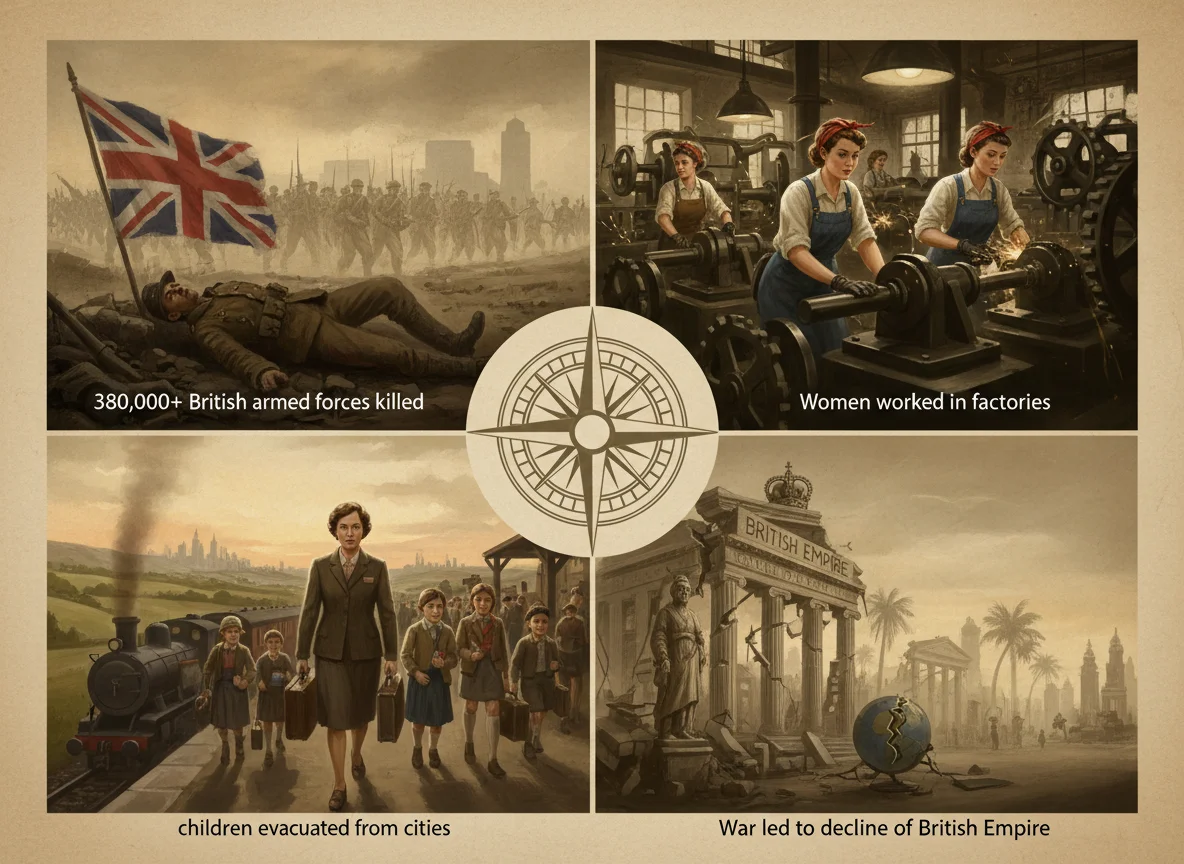
World War II had a profound impact on Britain. Over 380,000 British armed forces personnel were killed. Many civilians also died in the bombing. The war effort involved the whole population — women worked in factories and on farms, and children were evacuated from cities to the countryside. The war also led to the decline of the British Empire and major social changes.
Key Facts
- 380,000+ British armed forces killed
- Women worked in factories; children evacuated from cities
- War led to decline of British Empire
📝 Нотатки для навчання
- Вінстон Черчилль став прем'єр-міністром у 1940 році і провів Британію через більшу частину Другої світової війни.
- Друга світова війна почалася 1939 р., коли Німеччина вторглася в Польщу
- Вінстон Черчилль став прем'єр-міністром у 1940 р.
- Відомі промови: «битися на пляжах», «так багато завдячують так багатьом так небагатьом»
- Бліц — це тривалі бомбардування британських міст німецькою авіацією.
- Друга світова війна почалася 1939 р., коли Німеччина вторглася в Польщу
- Вінстон Черчилль став прем'єр-міністром у 1940 р.
- Відомі промови: «битися на пляжах», «так багато завдячують так багатьом так небагатьом»
- Битва за Британію була вирішальною повітряною битвою 1940 року, коли Королівські ВПС захищали Британію від німецьких повітряних атак.
- Друга світова війна почалася 1939 р., коли Німеччина вторглася в Польщу
- Вінстон Черчилль став прем'єр-міністром у 1940 р.
- Відомі промови: «битися на пляжах», «так багато завдячують так багатьом так небагатьом»
- День Перемоги в Європі — 8 травня 1945 року.
- Друга світова війна почалася 1939 р., коли Німеччина вторглася в Польщу
- Вінстон Черчилль став прем'єр-міністром у 1940 р.
- Відомі промови: «битися на пляжах», «так багато завдячують так багатьом так небагатьом»
- Друга світова війна почалася у 1939 році, коли Німеччина вторглася в Польщу.
- Друга світова війна почалася 1939 р., коли Німеччина вторглася в Польщу
- Вінстон Черчилль став прем'єр-міністром у 1940 р.
- Відомі промови: «битися на пляжах», «так багато завдячують так багатьом так небагатьом»
Реклама