📕 Chapter 3: A Long and Illustrious History
3.4.1 The constitutional monarchy and Robert Walpole
2 paragraphs · 3 questions
After the Bill of Rights, Britain gradually developed into a constitutional monarchy, where the monarch's powers were limited by law and Parliament held the real power. Queen Anne, the last Stuart monarch, died in 1714 without a surviving heir. The crown passed to George I, a German Protestant from the House of Hanover, beginning the Hanoverian dynasty.
Key Facts
- Britain became a constitutional monarchy
- Queen Anne last Stuart monarch, died 1714
- George I from House of Hanover began new dynasty
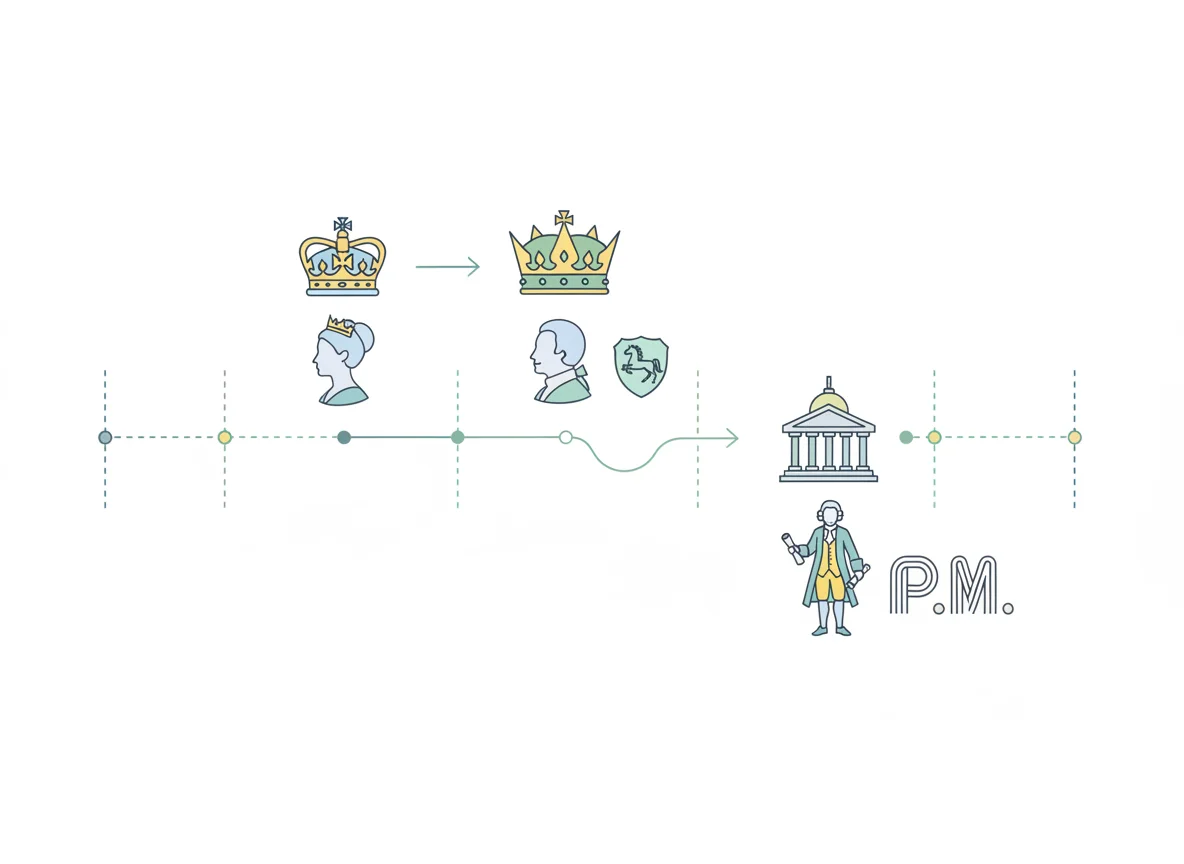
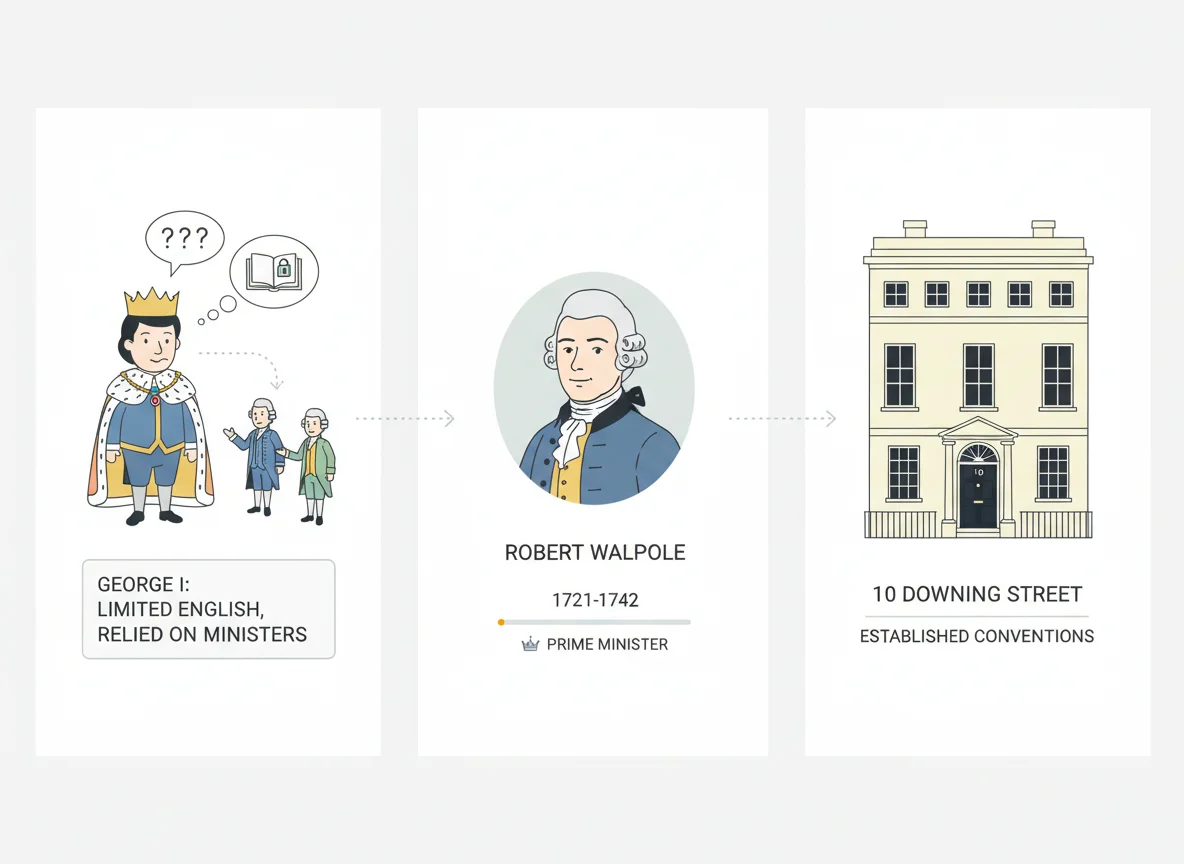
George I spoke little English and relied heavily on his ministers. Sir Robert Walpole became the first Prime Minister in practice, serving from 1721 to 1742. He managed government business in the House of Commons and established many of the conventions of the office of Prime Minister, including living at 10 Downing Street.
Key Facts
- George I spoke little English, relied on ministers
- Robert Walpole first Prime Minister 1721-1742
- Established conventions including 10 Downing Street
📝 Note de studiu
- Sir Robert Walpole este considerat în general primul prim-ministru britanic, activând din 1721 până în 1742.
- Britain a devenit o monarhie constituțională
- Regina Anne, ultimul monarh Stuart, a murit în 1714
- George I din House of Hanover a început o nouă dinastie
- House of Hanover a succedat Stuart-ilor când George I a devenit rege în 1714.
- Britain a devenit o monarhie constituțională
- Regina Anne, ultimul monarh Stuart, a murit în 1714
- George I din House of Hanover a început o nouă dinastie
- George I vorbea puțin engleză și se baza în mare măsură pe miniștrii săi pentru a guverna.
- Britain a devenit o monarhie constituțională
- Regina Anne, ultimul monarh Stuart, a murit în 1714
- George I din House of Hanover a început o nouă dinastie
Advertisement