📕 Chapter 3: A Long and Illustrious History
3.3.8 Charles I and the English Civil War
3 paragraphs · 6 questions
Charles I became king in 1625 and, like his father James I, believed in the divine right of kings. He frequently clashed with Parliament over money and religion. In 1629, he dissolved Parliament and ruled alone for 11 years (known as the 'Personal Rule' or 'Eleven Years' Tyranny'). When he recalled Parliament in 1640, the conflicts escalated.
Key Facts
- Charles I became king 1625, believed in divine right
- Dissolved Parliament 1629, ruled alone for 11 years
- Recalled Parliament 1640, conflicts escalated
The English Civil War broke out in 1642 between the Royalists (Cavaliers), who supported the king, and the Parliamentarians (Roundheads), who supported Parliament. The war was fought across England, Scotland, and Wales. The Parliamentarians, led by Oliver Cromwell, eventually won. Charles I was tried for treason and executed in 1649 — the first time an English king had been publicly tried and executed.
Key Facts
- Civil War 1642: Royalists (Cavaliers) vs Parliamentarians (Roundheads)
- Oliver Cromwell led Parliamentarians to victory
- Charles I executed 1649 — first English king publicly executed
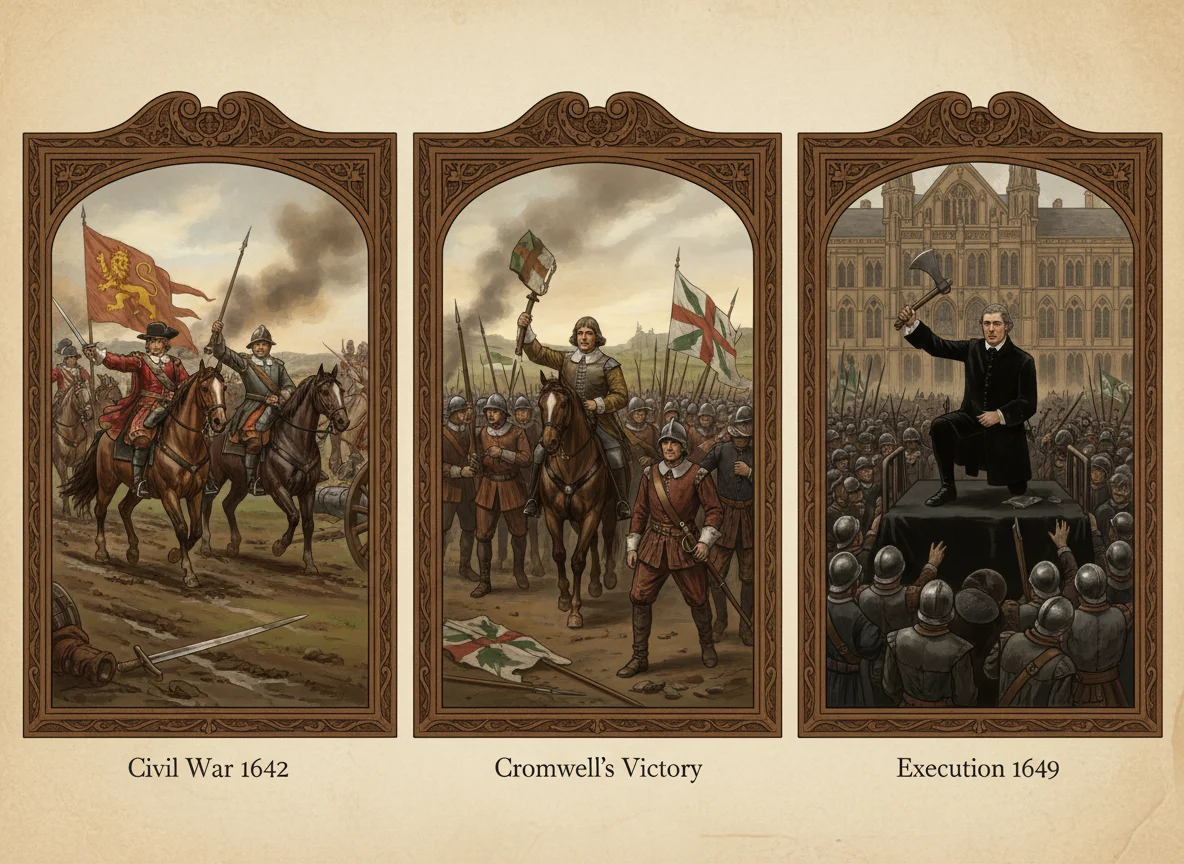
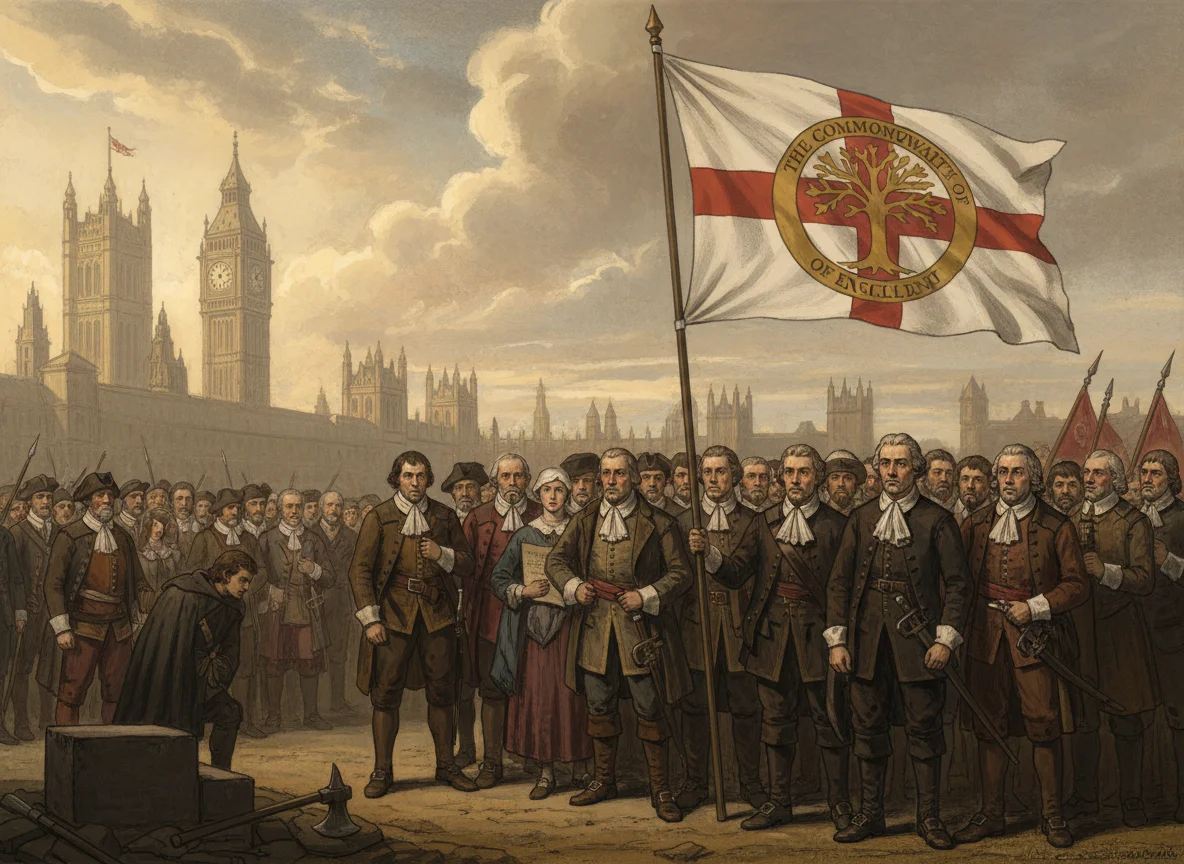
The execution of Charles I was a momentous event. It established the principle that even a king could be held accountable for his actions. After the king's death, England became a republic known as the Commonwealth, with no monarch. This period lasted until 1660.
Key Facts
- Execution established king's accountability
- England became a republic — the Commonwealth
- Republic lasted until 1660
📝 Note de studiu
- Războiul Civil Englez a fost între Regaliști (Cavalieri) și Parlamentari (Capete Rotunde).
- Carol I a devenit rege în 1625, credea în dreptul divin
- A dizolvat Parliament-ul în 1629, a condus singur timp de 11 ani
- A rechemat Parliament-ul în 1640, conflictele au escaladat
- Războiul Civil Englez a izbucnit în 1642.
- Carol I a devenit rege în 1625, credea în dreptul divin
- A dizolvat Parliament-ul în 1629, a condus singur timp de 11 ani
- A rechemat Parliament-ul în 1640, conflictele au escaladat
- Carol I a fost judecat pentru trădare și executat în 1649.
- Carol I a devenit rege în 1625, credea în dreptul divin
- A dizolvat Parliament-ul în 1629, a condus singur timp de 11 ani
- A rechemat Parliament-ul în 1640, conflictele au escaladat
- Oliver Cromwell a condus forțele Parliament-ului către victorie.
- Carol I a devenit rege în 1625, credea în dreptul divin
- A dizolvat Parliament-ul în 1629, a condus singur timp de 11 ani
- A rechemat Parliament-ul în 1640, conflictele au escaladat
- „Domnia Personală” a fost perioada începând cu 1629, când Charles I a dizolvat Parliament-ul și a condus singur timp de 11 ani.
- Carol I a devenit rege în 1625, credea în dreptul divin
- A dizolvat Parliament-ul în 1629, a condus singur timp de 11 ani
- A rechemat Parliament-ul în 1640, conflictele au escaladat
- După execuția lui Charles I, Anglia a devenit o republică cunoscută sub numele de Commonwealth.
- Carol I a devenit rege în 1625, credea în dreptul divin
- A dizolvat Parliament-ul în 1629, a condus singur timp de 11 ani
- A rechemat Parliament-ul în 1640, conflictele au escaladat
Advertisement