📕 Chapter 3: A Long and Illustrious History
3.4.12 The development of democracy and voting rights
2 paragraphs · 3 questions
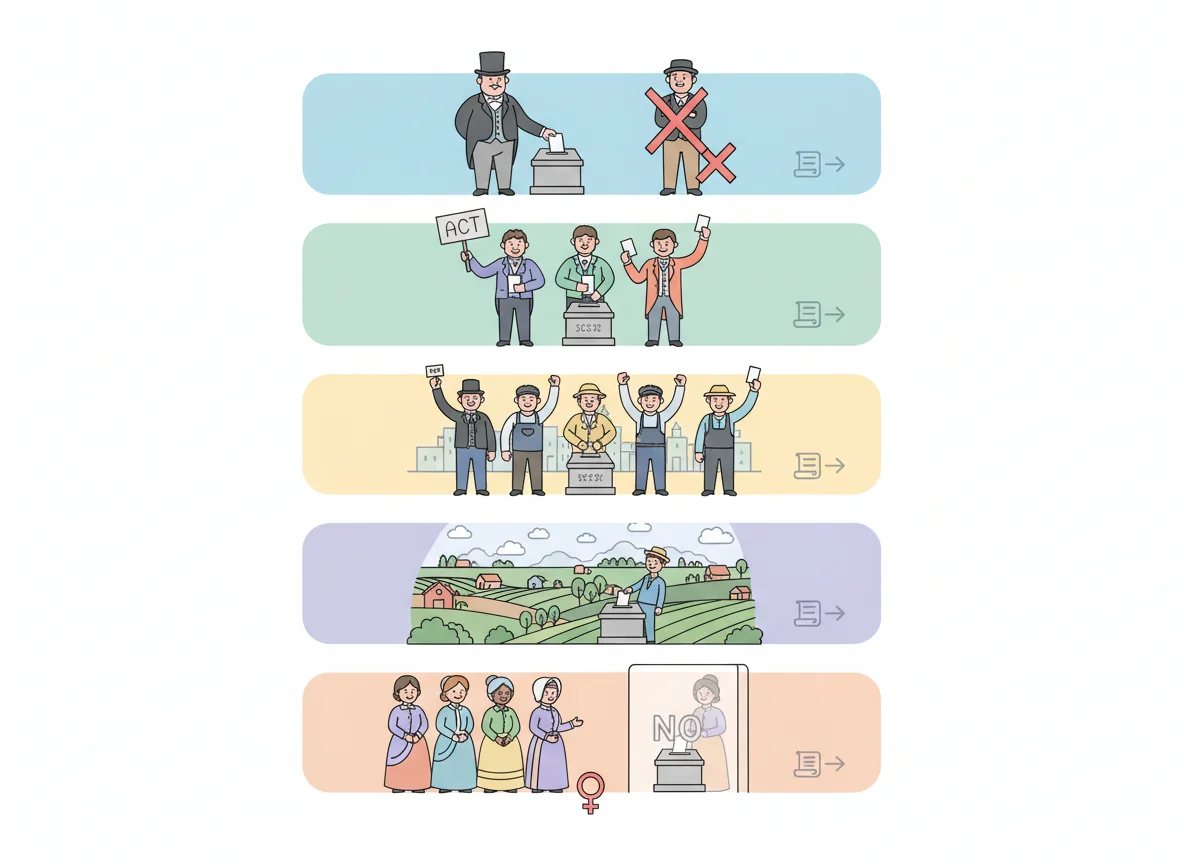
Throughout the 19th century, the right to vote was gradually extended. Before the Reform Act of 1832, only a small number of wealthy men could vote. The 1832 Act gave the vote to more middle-class men. The 1867 Act extended it to many working-class men in towns. The 1884 Act gave the vote to most men in the countryside. However, women and the poorest men were still excluded.
Key Facts
- Before 1832 only wealthy men could vote
- 1832 Act — middle-class men; 1867 — working-class men in towns
- 1884 — most men in countryside; women still excluded
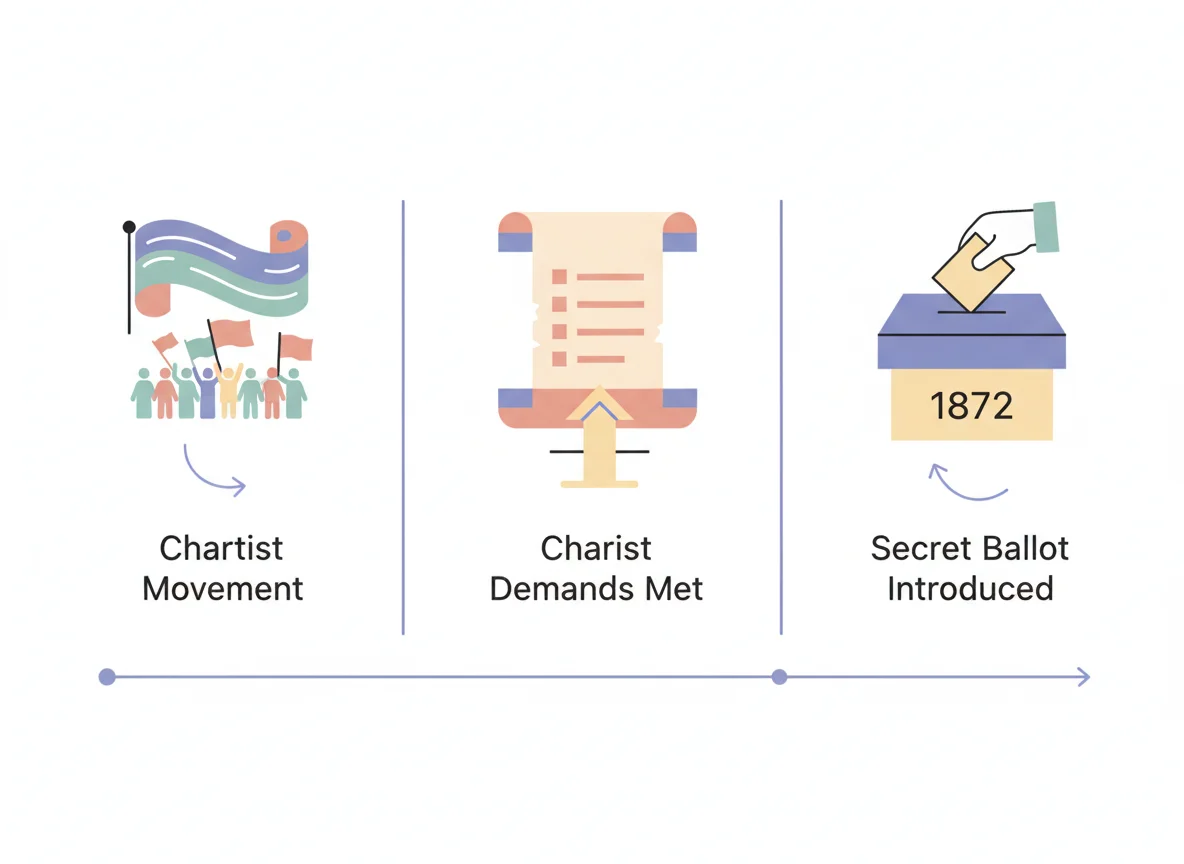
Other important democratic reforms included the introduction of the secret ballot in 1872, which meant people could vote without others knowing their choice. The Chartist movement of the 1830s and 1840s campaigned for democratic reforms including votes for all men, secret ballots, and equal-sized constituencies. Although the Chartists were not immediately successful, most of their demands were eventually met.
Key Facts
- Secret ballot introduced 1872
- Chartist movement 1830s-1840s campaigned for democratic reforms
- Most Chartist demands eventually met
📝 Notas de estudio
- El voto secreto (secret ballot) se introdujo en 1872.
- Antes de 1832, solo los hombres ricos podían votar
- Ley de 1832 — hombres de clase media; 1867 — hombres de clase trabajadora en las ciudades
- 1884 — la mayoría de los hombres en el campo; las mujeres seguían excluidas
- Los Chartists hicieron campaña por reformas democráticas, incluyendo el voto para todos los hombres y el sufragio secreto.
- Antes de 1832, solo los hombres ricos podían votar
- Ley de 1832 — hombres de clase media; 1867 — hombres de clase trabajadora en las ciudades
- 1884 — la mayoría de los hombres en el campo; las mujeres seguían excluidas
- La 1867 Reform Act extendió el voto a muchos hombres de clase trabajadora en las ciudades.
- Antes de 1832, solo los hombres ricos podían votar
- Ley de 1832 — hombres de clase media; 1867 — hombres de clase trabajadora en las ciudades
- 1884 — la mayoría de los hombres en el campo; las mujeres seguían excluidas
Advertisement