📕 Chapter 3: A Long and Illustrious History
3.5.3 The partition of Ireland
2 paragraphs · 4 questions
After World War I, the Irish independence movement intensified. In 1916, the Easter Rising in Dublin was an armed rebellion against British rule. Although it was quickly suppressed, it increased support for Irish independence. In 1921, a treaty was signed that led to the partition of Ireland in 1922.
Key Facts
- Easter Rising 1916 in Dublin — armed rebellion against British rule
- Quickly suppressed but increased support for independence
- Treaty signed 1921; Ireland partitioned 1922
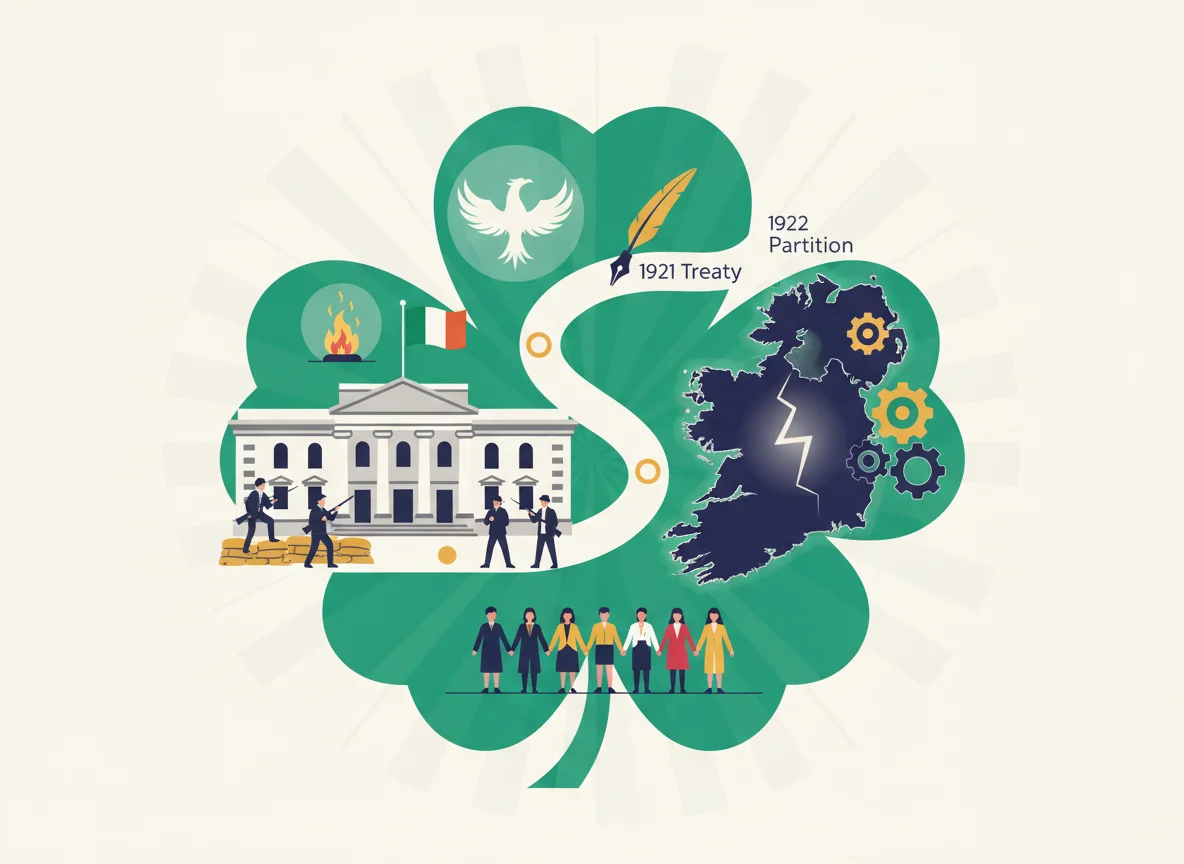
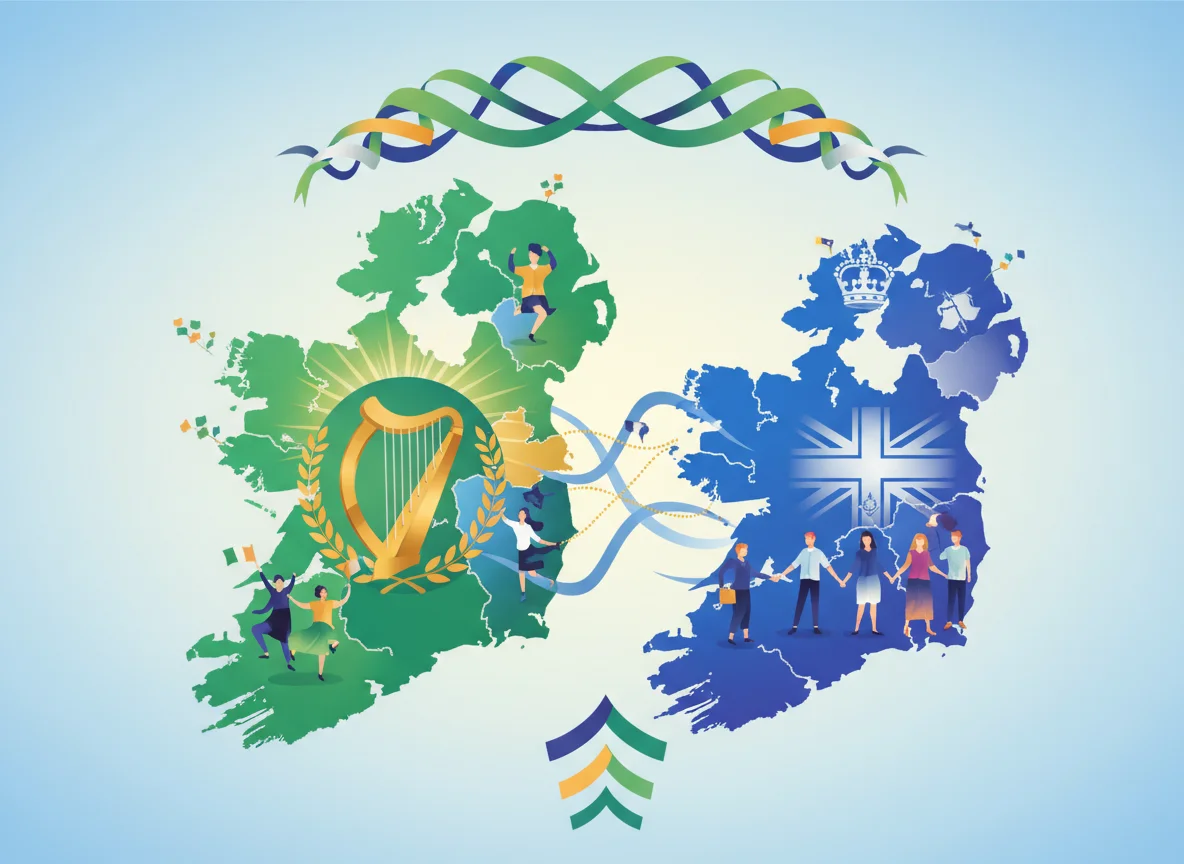
Ireland was divided into two parts: the Irish Free State (later the Republic of Ireland), which consisted of the 26 southern counties and became independent, and Northern Ireland, which consisted of 6 counties and remained part of the United Kingdom. The partition was controversial and led to decades of tension, particularly in Northern Ireland.
Key Facts
- Irish Free State — 26 southern counties, became independent
- Northern Ireland — 6 counties, remained part of UK
- Partition was controversial and led to decades of tension
Advertisement