📕 Chapter 3: A Long and Illustrious History
3.1.4 The Vikings and Danish invasions
2 paragraphs · 5 questions
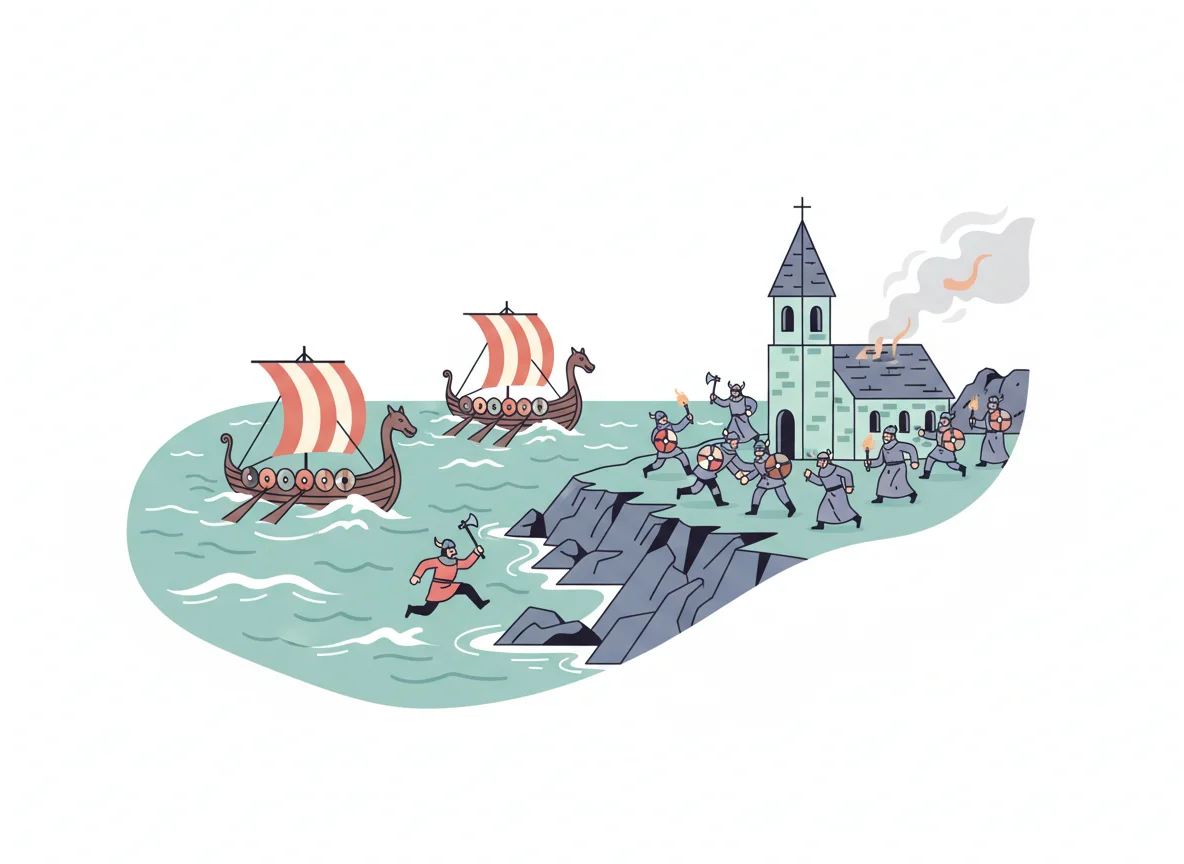
From about AD 789, the Vikings from Denmark and Norway began raiding Britain. They attacked monasteries along the coast, stealing treasure and taking captives. The Vikings were skilled sailors and warriors. Over time, they began to settle in Britain, particularly in the east and north of England, in an area that became known as the Danelaw.
Key Facts
- Vikings from Denmark and Norway raided from ~AD 789
- They attacked monasteries along the coast
- Settled in eastern and northern England (the Danelaw)
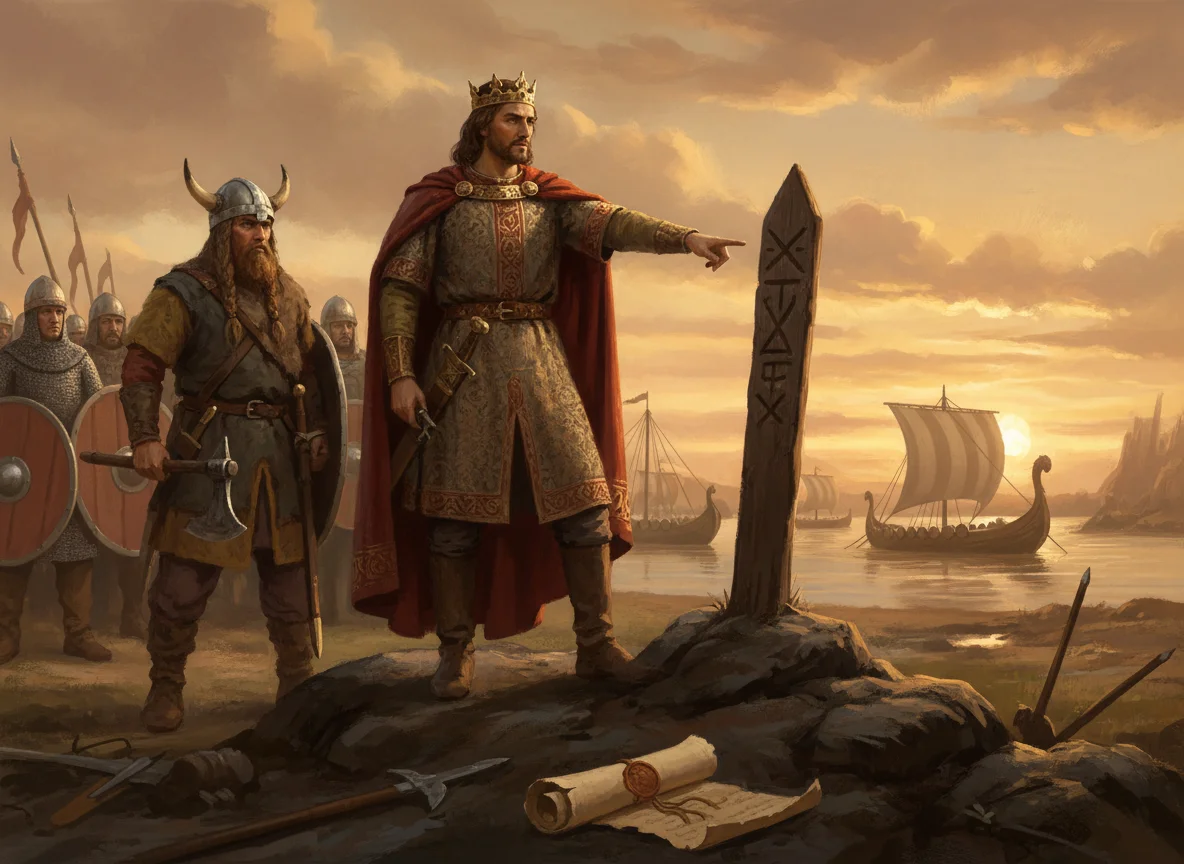
King Alfred the Great of Wessex fought against the Vikings and eventually made peace with them. He agreed to let the Vikings keep the Danelaw in exchange for peace. Alfred is the only English king to be called 'the Great'. He is also remembered for promoting education and establishing a legal code. His grandson Athelstan later became the first king of all England.
Key Facts
- Alfred the Great of Wessex fought the Vikings
- Alfred agreed to the Danelaw boundary
- Alfred is the only English king called 'the Great'
- Athelstan was the first king of all England
📝 অধ্যয়ন নোট
- ভাইকিংরা ডেনমার্ক এবং নরওয়ে থেকে এসেছিল।
- ডেনমার্ক ও নরওয়ের ভাইকিংরা প্রায় ~AD 789 সাল থেকে হামলা চালিয়েছিল
- তারা উপকূল বরাবর মঠগুলিতে আক্রমণ করেছিল
- পূর্ব ও উত্তর England-এ (the Danelaw) বসতি স্থাপন করেছিল
- The Danelaw ছিল পূর্ব ও উত্তর England-এর সেই এলাকা যেখানে ভাইকিংরা বসতি স্থাপন করেছিল।
- ডেনমার্ক ও নরওয়ের ভাইকিংরা প্রায় ~AD 789 সাল থেকে হামলা চালিয়েছিল
- তারা উপকূল বরাবর মঠগুলিতে আক্রমণ করেছিল
- পূর্ব ও উত্তর England-এ (the Danelaw) বসতি স্থাপন করেছিল
- Wessex-এর King Alfred the Great ভাইকিংদের বিরুদ্ধে যুদ্ধ করেছিলেন এবং তিনিই একমাত্র English রাজা যাকে 'the Great' বলা হয়।
- ডেনমার্ক ও নরওয়ের ভাইকিংরা প্রায় ~AD 789 সাল থেকে হামলা চালিয়েছিল
- তারা উপকূল বরাবর মঠগুলিতে আক্রমণ করেছিল
- পূর্ব ও উত্তর England-এ (the Danelaw) বসতি স্থাপন করেছিল
- Athelstan, Alfred the Great-এর নাতি, সমগ্র England-এর প্রথম রাজা হয়েছিলেন।
- ডেনমার্ক ও নরওয়ের ভাইকিংরা প্রায় ~AD 789 সাল থেকে হামলা চালিয়েছিল
- তারা উপকূল বরাবর মঠগুলিতে আক্রমণ করেছিল
- পূর্ব ও উত্তর England-এ (the Danelaw) বসতি স্থাপন করেছিল
- ভাইকিংরা উপকূল বরাবর মঠগুলিতে আক্রমণ করত, ধনসম্পদ চুরি করত এবং বন্দীদের ধরে নিয়ে যেত।
- ডেনমার্ক ও নরওয়ের ভাইকিংরা প্রায় ~AD 789 সাল থেকে হামলা চালিয়েছিল
- তারা উপকূল বরাবর মঠগুলিতে আক্রমণ করেছিল
- পূর্ব ও উত্তর England-এ (the Danelaw) বসতি স্থাপন করেছিল
Advertisement