📕 Chapter 3: A Long and Illustrious History
3.1.3 The Anglo-Saxons
2 paragraphs · 5 questions
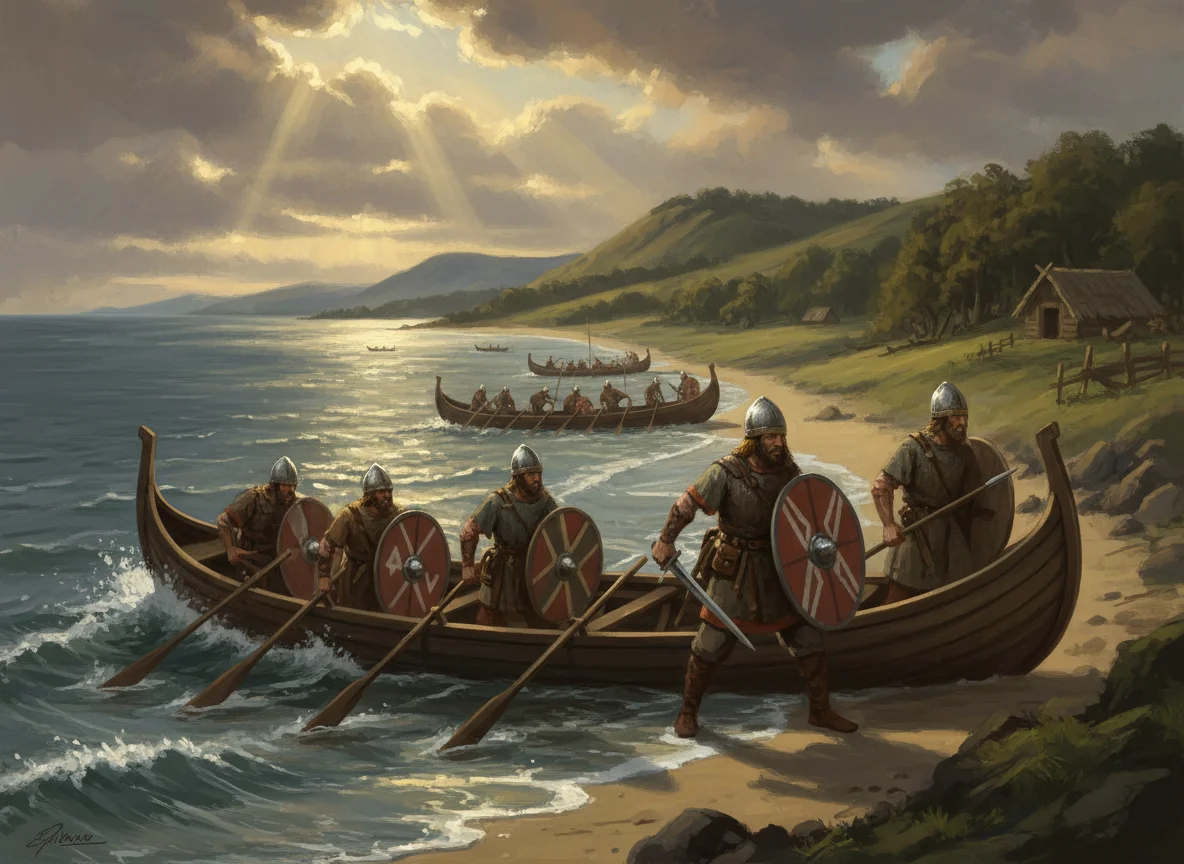
After the Romans left, tribes from northern Europe began to invade and settle in Britain. These were the Jutes (from the area of modern Denmark), the Angles (from modern Germany and Denmark), and the Saxons (from modern Germany). They became known collectively as the Anglo-Saxons. The Angles gave their name to 'England' ('Angle-land').
Key Facts
- Jutes, Angles and Saxons invaded after the Romans left
- They came from northern Europe (modern Denmark and Germany)
- The Angles gave their name to England (Angle-land)
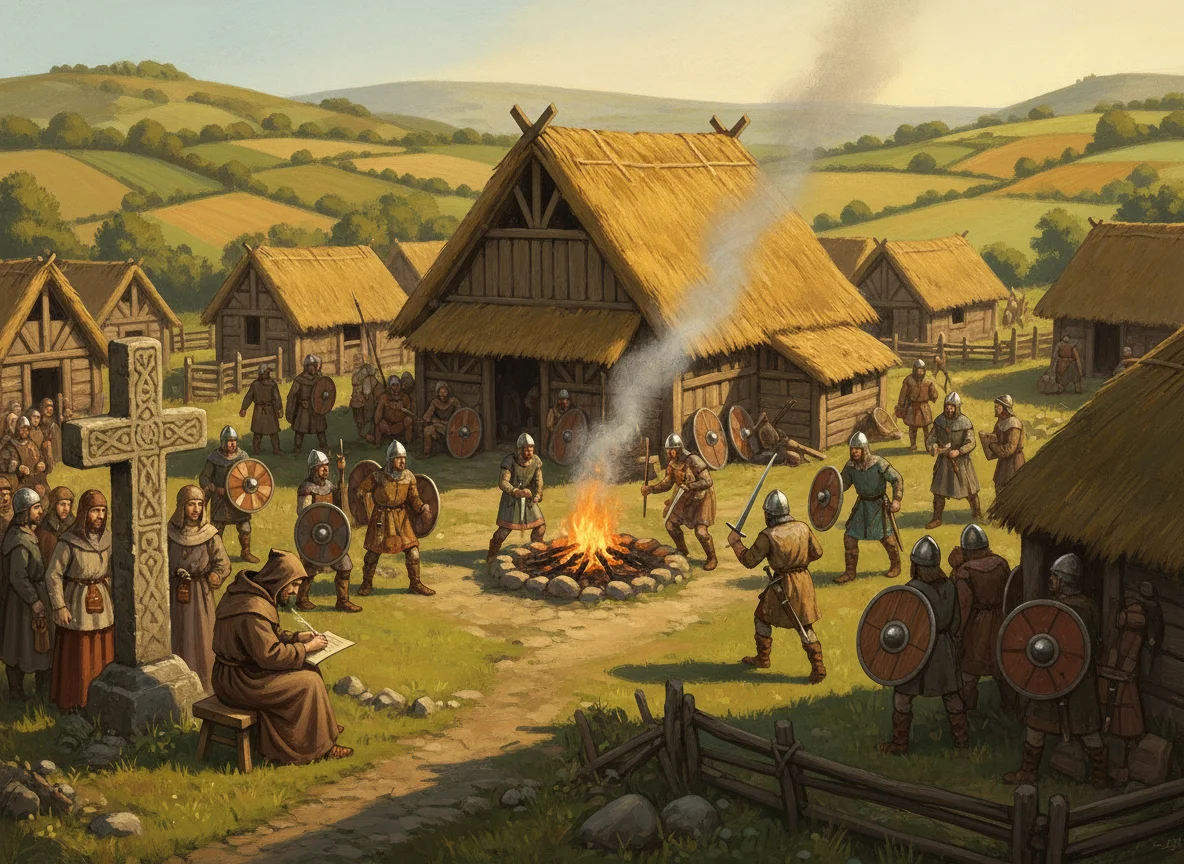
The Anglo-Saxons established several kingdoms across England, including Wessex, Mercia, Northumbria, and East Anglia. They were initially pagan but gradually converted to Christianity. The Anglo-Saxon period saw the development of the English language, a legal system, and a rich artistic tradition including illuminated manuscripts and metalwork.
Key Facts
- Anglo-Saxon kingdoms: Wessex, Mercia, Northumbria, East Anglia
- Gradually converted from paganism to Christianity
- Developed the English language and legal system
📝 অধ্যয়ন নোট
- রোমানরা চলে যাওয়ার পর Jutes, Angles এবং Saxons উত্তর ইউরোপ থেকে আক্রমণ করেছিল।
- রোমানরা চলে যাওয়ার পর Jutes, Angles এবং Saxons আক্রমণ করেছিল
- তারা উত্তর ইউরোপ (আধুনিক ডেনমার্ক ও জার্মানি) থেকে এসেছিল
- Angles তাদের নাম England (Angle-land)-কে দিয়েছিল
- 'England' নামটি Angles থেকে এসেছে — 'Angle-land'৷
- রোমানরা চলে যাওয়ার পর Jutes, Angles এবং Saxons আক্রমণ করেছিল
- তারা উত্তর ইউরোপ (আধুনিক ডেনমার্ক ও জার্মানি) থেকে এসেছিল
- Angles তাদের নাম England (Angle-land)-কে দিয়েছিল
- Wessex ছিল Mercia, Northumbria এবং East Anglia-এর সাথে অ্যাংলো-স্যাক্সন রাজ্যগুলির মধ্যে একটি।
- রোমানরা চলে যাওয়ার পর Jutes, Angles এবং Saxons আক্রমণ করেছিল
- তারা উত্তর ইউরোপ (আধুনিক ডেনমার্ক ও জার্মানি) থেকে এসেছিল
- Angles তাদের নাম England (Angle-land)-কে দিয়েছিল
- অ্যাংলো-স্যাক্সনরা উত্তর ইউরোপ থেকে এসেছিল — Jutes আধুনিক ডেনমার্ক থেকে, Angles এবং Saxons আধুনিক জার্মানি থেকে।
- রোমানরা চলে যাওয়ার পর Jutes, Angles এবং Saxons আক্রমণ করেছিল
- তারা উত্তর ইউরোপ (আধুনিক ডেনমার্ক ও জার্মানি) থেকে এসেছিল
- Angles তাদের নাম England (Angle-land)-কে দিয়েছিল
- মিথ্যা। অ্যাংলো-স্যাক্সনরা প্রাথমিকভাবে পৌত্তলিক ছিল এবং ধীরে ধীরে খ্রিস্টান ধর্মে ধর্মান্তরিত হয়েছিল।
- রোমানরা চলে যাওয়ার পর Jutes, Angles এবং Saxons আক্রমণ করেছিল
- তারা উত্তর ইউরোপ (আধুনিক ডেনমার্ক ও জার্মানি) থেকে এসেছিল
- Angles তাদের নাম England (Angle-land)-কে দিয়েছিল
Advertisement