📕 Chapter 3: A Long and Illustrious History
3.1.2 The Romans
3 paragraphs · 6 questions
Julius Caesar led a Roman invasion of Britain in 55 BC, but it was not successful. The Romans did not conquer Britain until AD 43, under Emperor Claudius. The Romans ruled most of Britain for nearly 400 years. They built roads, public buildings, a system of law, and many towns, including Londinium (London), which became an important trading centre.
Key Facts
- Julius Caesar invaded in 55 BC but failed
- Romans conquered Britain in AD 43 under Emperor Claudius
- Romans ruled for nearly 400 years and built roads, towns, and Londinium (London)
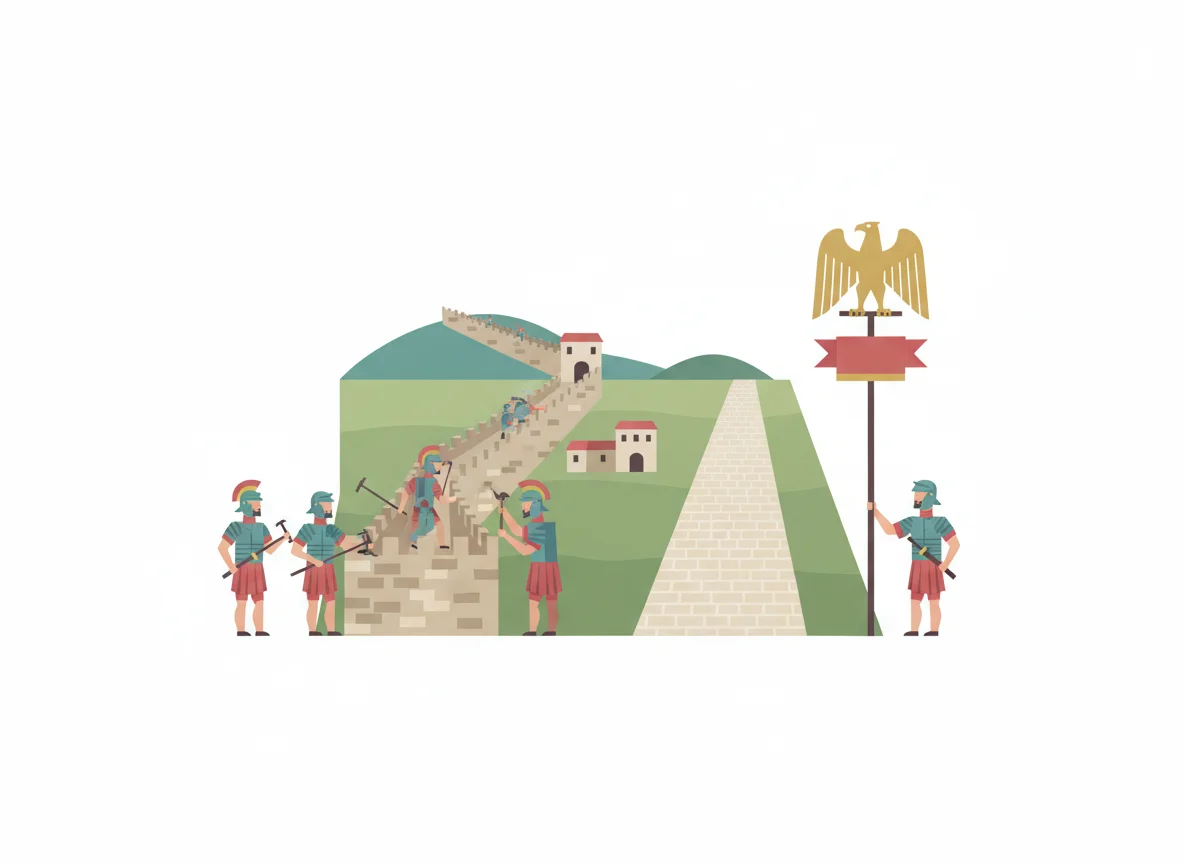
The Romans never conquered the whole of Britain. They could not defeat the tribes in Scotland (known as the Picts and the Scots). Emperor Hadrian built a wall across northern England to keep out the northern tribes. Hadrian's Wall, built starting in AD 122, ran from the Solway Firth to the River Tyne and can still be seen today.
Key Facts
- Romans never conquered Scotland
- Hadrian's Wall built starting AD 122
- Wall ran from Solway Firth to River Tyne
The Romans left Britain in AD 410 to defend other parts of the Roman Empire. By this time, many people in Britain had adopted Roman customs, the Latin language, and Christianity. When the Romans left, Britain was no longer protected by the Roman army and became vulnerable to invasion by other groups.
Key Facts
- Romans left Britain in AD 410
- Many Britons had adopted Roman customs and Christianity
- Britain became vulnerable to invasion after Romans left
📝 অধ্যয়ন নোট
- Julius Caesar 55 BC সালে ব্রিটেনে একটি রোমান আক্রমণের নেতৃত্ব দিয়েছিলেন, কিন্তু তা সফল হয়নি।
- Julius Caesar 55 BC সালে আক্রমণ করেছিলেন কিন্তু ব্যর্থ হয়েছিলেন
- Emperor Claudius-এর অধীনে রোমানরা AD 43 সালে ব্রিটেন জয় করেছিল
- রোমানরা প্রায় 400 বছর শাসন করেছিল এবং রাস্তা, শহর ও Londinium (London) নির্মাণ করেছিল
- Emperor Claudius-এর অধীনে রোমানরা AD 43 সালে ব্রিটেন জয় করেছিল।
- Julius Caesar 55 BC সালে আক্রমণ করেছিলেন কিন্তু ব্যর্থ হয়েছিলেন
- Emperor Claudius-এর অধীনে রোমানরা AD 43 সালে ব্রিটেন জয় করেছিল
- রোমানরা প্রায় 400 বছর শাসন করেছিল এবং রাস্তা, শহর ও Londinium (London) নির্মাণ করেছিল
- Hadrian's Wall নির্মিত হয়েছিল উত্তরের উপজাতিদের (Picts এবং Scots) ঠেকিয়ে রাখতে, যাদের রোমানরা পরাজিত করতে পারেনি।
- Julius Caesar 55 BC সালে আক্রমণ করেছিলেন কিন্তু ব্যর্থ হয়েছিলেন
- Emperor Claudius-এর অধীনে রোমানরা AD 43 সালে ব্রিটেন জয় করেছিল
- রোমানরা প্রায় 400 বছর শাসন করেছিল এবং রাস্তা, শহর ও Londinium (London) নির্মাণ করেছিল
- রোমানরা AD 410 সালে ব্রিটেন ত্যাগ করেছিল রোমান সাম্রাজ্যের অন্যান্য অংশ রক্ষা করার জন্য।
- Julius Caesar 55 BC সালে আক্রমণ করেছিলেন কিন্তু ব্যর্থ হয়েছিলেন
- Emperor Claudius-এর অধীনে রোমানরা AD 43 সালে ব্রিটেন জয় করেছিল
- রোমানরা প্রায় 400 বছর শাসন করেছিল এবং রাস্তা, শহর ও Londinium (London) নির্মাণ করেছিল
- রোমানরা London-কে 'Londinium' বলত এবং এটি একটি গুরুত্বপূর্ণ বাণিজ্য কেন্দ্রে পরিণত হয়েছিল।
- Julius Caesar 55 BC সালে আক্রমণ করেছিলেন কিন্তু ব্যর্থ হয়েছিলেন
- Emperor Claudius-এর অধীনে রোমানরা AD 43 সালে ব্রিটেন জয় করেছিল
- রোমানরা প্রায় 400 বছর শাসন করেছিল এবং রাস্তা, শহর ও Londinium (London) নির্মাণ করেছিল
- Hadrian's Wall-এর নির্মাণ AD 122 সালে শুরু হয়েছিল এবং এটি Solway Firth থেকে River Tyne পর্যন্ত বিস্তৃত ছিল।
- Julius Caesar 55 BC সালে আক্রমণ করেছিলেন কিন্তু ব্যর্থ হয়েছিলেন
- Emperor Claudius-এর অধীনে রোমানরা AD 43 সালে ব্রিটেন জয় করেছিল
- রোমানরা প্রায় 400 বছর শাসন করেছিল এবং রাস্তা, শহর ও Londinium (London) নির্মাণ করেছিল
Advertisement