📕 Chapter 3: A Long and Illustrious History
3.6.3 Social change in the 1960s and 1970s
2 paragraphs · 3 questions
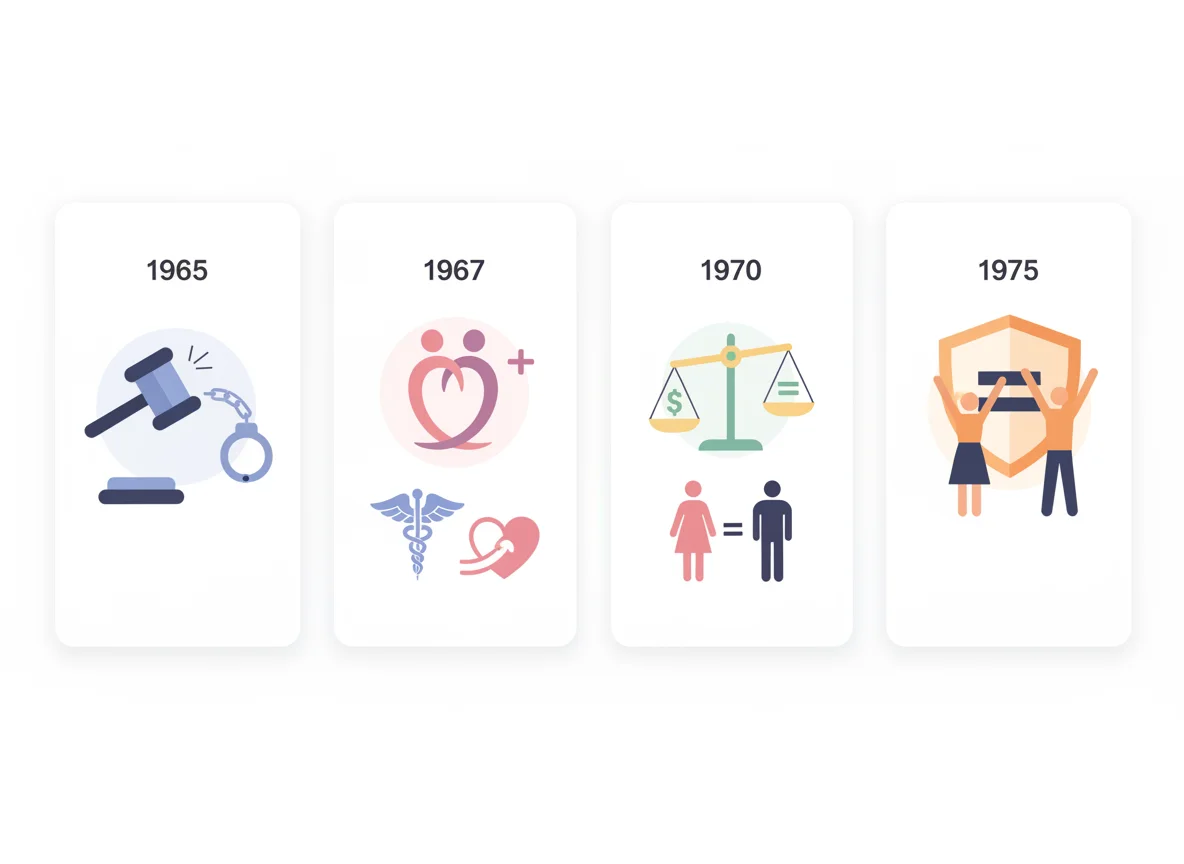
The 1960s and 1970s were a period of significant social change in Britain. Important legislation included the abolition of the death penalty (1965), the legalisation of abortion (1967), the decriminalisation of homosexuality (1967), and the Equal Pay Act (1970). The Sex Discrimination Act of 1975 made it illegal to discriminate against women in employment and education.
Key Facts
- Death penalty abolished 1965
- Abortion legalised and homosexuality decriminalised 1967
- Equal Pay Act 1970; Sex Discrimination Act 1975
The 1960s also saw a cultural revolution. British pop music, led by The Beatles and The Rolling Stones, became famous worldwide. London became a centre of fashion and culture. The 'Swinging Sixties' represented a break from the more conservative values of the post-war period. Mary Quant popularised the miniskirt, and Carnaby Street became a symbol of youth culture.
Key Facts
- Beatles and Rolling Stones — British pop music went global
- London became centre of fashion — 'Swinging Sixties'
- Mary Quant popularised the miniskirt

📝 ملاحظات الدراسة
- ألغيت عقوبة الإعدام في Britain عام 1965.
- إلغاء عقوبة الإعدام 1965
- تشريع الإجهاض وإلغاء تجريم المثلية الجنسية 1967
- قانون المساواة في الأجور 1970؛ قانون التمييز الجنسي 1975
- قانون المساواة في الأجور لعام 1970 نص على المساواة في الأجور مقابل العمل المتساوي بغض النظر عن الجنس.
- إلغاء عقوبة الإعدام 1965
- تشريع الإجهاض وإلغاء تجريم المثلية الجنسية 1967
- قانون المساواة في الأجور 1970؛ قانون التمييز الجنسي 1975
- كانت فرقة The Beatles جزءًا أساسيًا من ثورة موسيقى البوب البريطانية في الستينيات.
- إلغاء عقوبة الإعدام 1965
- تشريع الإجهاض وإلغاء تجريم المثلية الجنسية 1967
- قانون المساواة في الأجور 1970؛ قانون التمييز الجنسي 1975
Advertisement