📕 Chapter 3: A Long and Illustrious History
3.3.8 Charles I and the English Civil War
3 paragraphs · 6 questions
Charles I became king in 1625 and, like his father James I, believed in the divine right of kings. He frequently clashed with Parliament over money and religion. In 1629, he dissolved Parliament and ruled alone for 11 years (known as the 'Personal Rule' or 'Eleven Years' Tyranny'). When he recalled Parliament in 1640, the conflicts escalated.
Key Facts
- Charles I became king 1625, believed in divine right
- Dissolved Parliament 1629, ruled alone for 11 years
- Recalled Parliament 1640, conflicts escalated
The English Civil War broke out in 1642 between the Royalists (Cavaliers), who supported the king, and the Parliamentarians (Roundheads), who supported Parliament. The war was fought across England, Scotland, and Wales. The Parliamentarians, led by Oliver Cromwell, eventually won. Charles I was tried for treason and executed in 1649 — the first time an English king had been publicly tried and executed.
Key Facts
- Civil War 1642: Royalists (Cavaliers) vs Parliamentarians (Roundheads)
- Oliver Cromwell led Parliamentarians to victory
- Charles I executed 1649 — first English king publicly executed
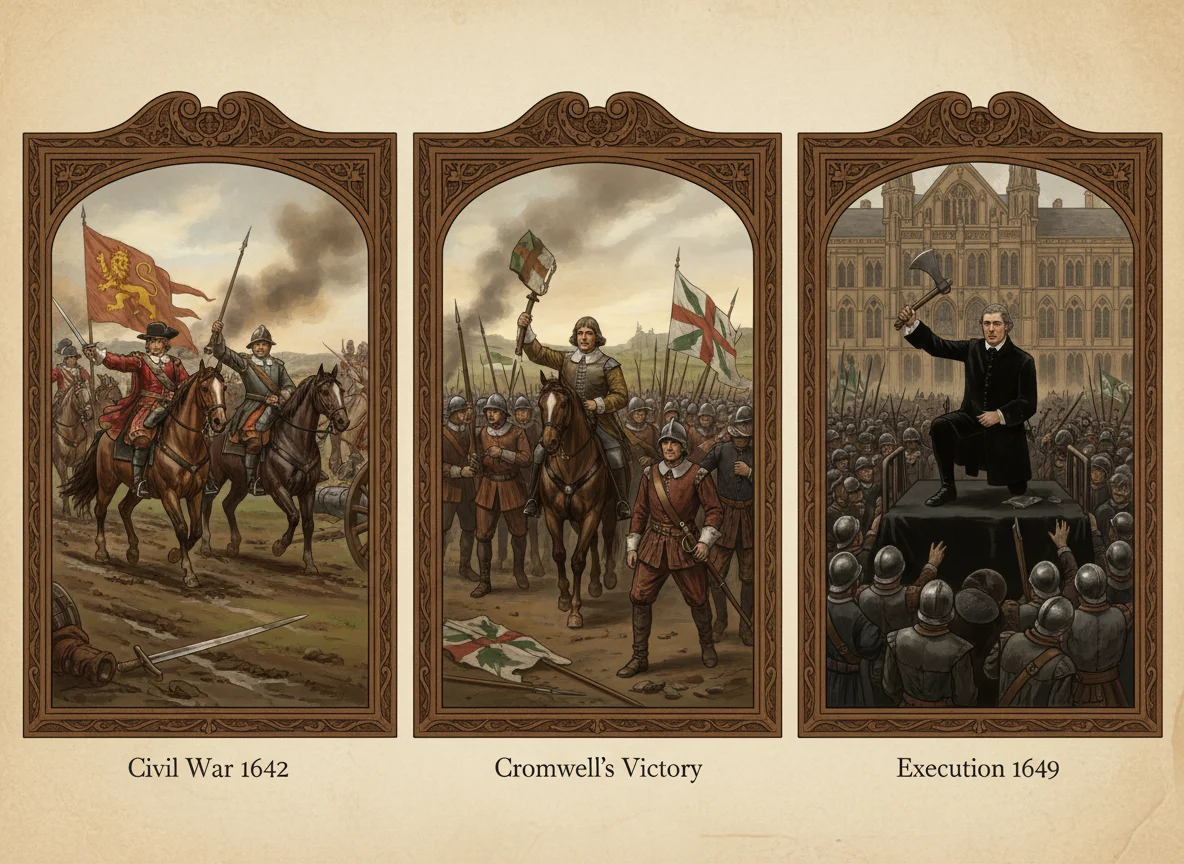
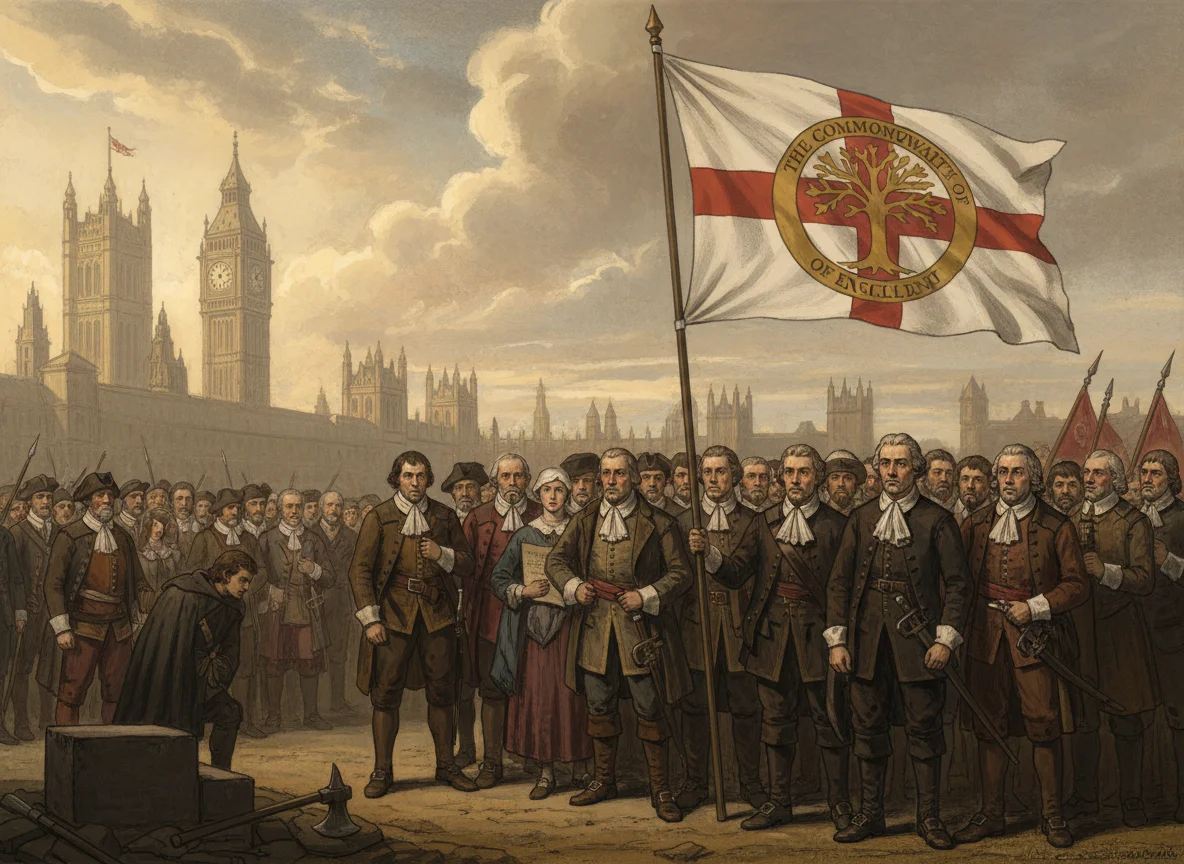
The execution of Charles I was a momentous event. It established the principle that even a king could be held accountable for his actions. After the king's death, England became a republic known as the Commonwealth, with no monarch. This period lasted until 1660.
Key Facts
- Execution established king's accountability
- England became a republic — the Commonwealth
- Republic lasted until 1660
📝 ملاحظات الدراسة
- كانت الحرب الأهلية الإنجليزية بين أنصار الملك (Royalists/Cavaliers) والبرلمانيين (Parliamentarians/Roundheads).
- أصبح Charles I ملكاً في 1625، وآمن بالحق الإلهي
- حل Parliament في 1629، وحكم بمفرده لمدة 11 عامًا
- استدعى Parliament في 1640، وتصاعدت الصراعات
- اندلعت الحرب الأهلية الإنجليزية في 1642.
- أصبح Charles I ملكاً في 1625، وآمن بالحق الإلهي
- حل Parliament في 1629، وحكم بمفرده لمدة 11 عامًا
- استدعى Parliament في 1640، وتصاعدت الصراعات
- حوكم Charles I بتهمة الخيانة وأُعدم في 1649.
- أصبح Charles I ملكاً في 1625، وآمن بالحق الإلهي
- حل Parliament في 1629، وحكم بمفرده لمدة 11 عامًا
- استدعى Parliament في 1640، وتصاعدت الصراعات
- قاد Oliver Cromwell قوات Parliament إلى النصر.
- أصبح Charles I ملكاً في 1625، وآمن بالحق الإلهي
- حل Parliament في 1629، وحكم بمفرده لمدة 11 عامًا
- استدعى Parliament في 1640، وتصاعدت الصراعات
- كان 'Personal Rule' (الحكم الشخصي) هو الفترة التي بدأت عام 1629 عندما حلّ Charles I الـ Parliament وحكم بمفرده لمدة 11 عامًا.
- أصبح Charles I ملكاً في 1625، وآمن بالحق الإلهي
- حل Parliament في 1629، وحكم بمفرده لمدة 11 عامًا
- استدعى Parliament في 1640، وتصاعدت الصراعات
- بعد إعدام Charles I، أصبحت England جمهورية عُرفت باسم Commonwealth.
- أصبح Charles I ملكاً في 1625، وآمن بالحق الإلهي
- حل Parliament في 1629، وحكم بمفرده لمدة 11 عامًا
- استدعى Parliament في 1640، وتصاعدت الصراعات
Advertisement