📕 Chapter 3: A Long and Illustrious History
3.2.2 The Magna Carta 1215
2 paragraphs · 5 questions
In 1215, King John was forced by his barons to sign the Magna Carta (the Great Charter) at Runnymede, near Windsor. The barons were angry about high taxes and the king's abuse of power. The Magna Carta established the principle that even the king was subject to the law and could not rule arbitrarily.
Key Facts
- King John forced to sign Magna Carta in 1215
- Signed at Runnymede near Windsor
- Established that the king is subject to the law
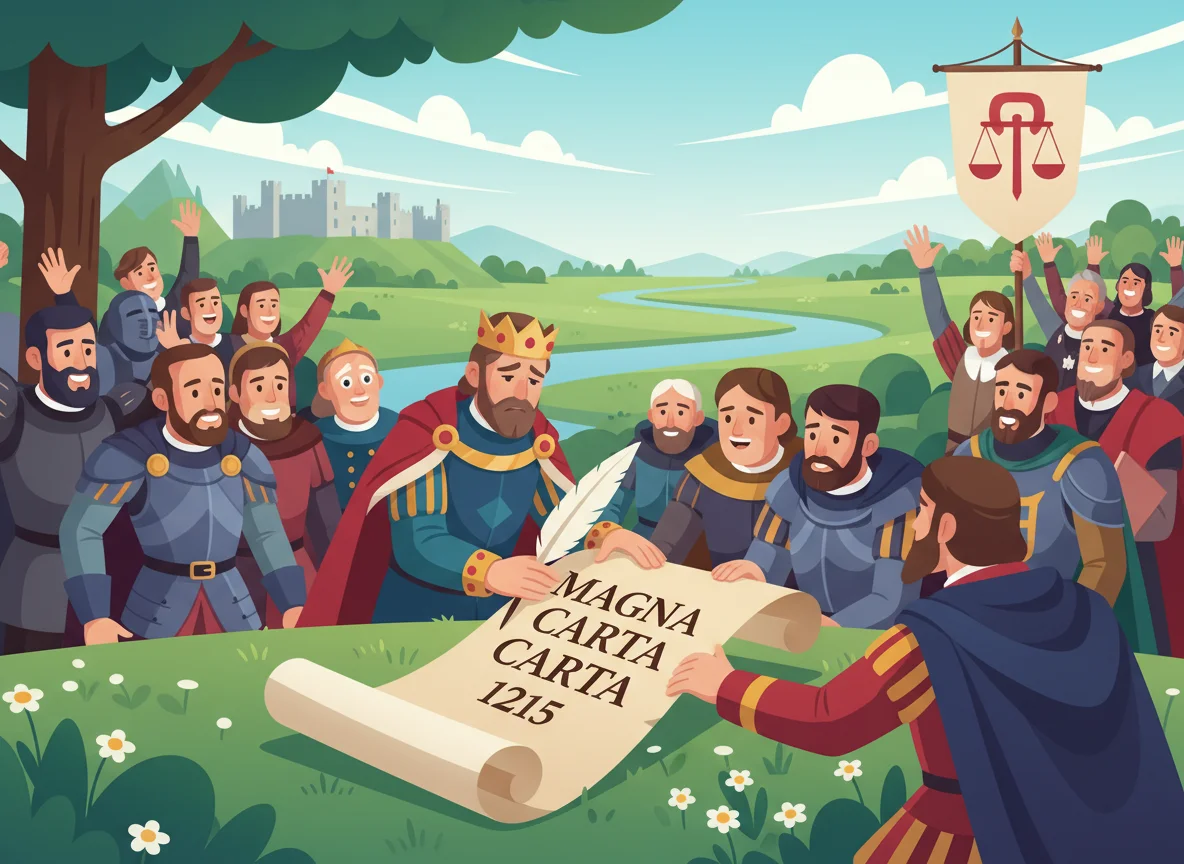
The Magna Carta is one of the most important documents in constitutional history. It protected the rights of the nobility and limited the power of the king. Key principles included the right to a fair trial and the idea that no free man could be imprisoned without lawful judgement. These ideas later influenced the development of democracy and human rights around the world.
Key Facts
- One of the most important constitutional documents
- Protected rights of nobility and limited royal power
- Influenced development of democracy and human rights worldwide

📝 ملاحظات الدراسة
- وُقعت Magna Carta في عام 1215.
- أُجبر King John على توقيع Magna Carta في عام 1215
- وُقعت في Runnymede بالقرب من Windsor
- أرست مبدأ أن الملك يخضع للقانون
- أُجبر King John من قبل باروناته على توقيع Magna Carta في Runnymede عام 1215.
- أُجبر King John على توقيع Magna Carta في عام 1215
- وُقعت في Runnymede بالقرب من Windsor
- أرست مبدأ أن الملك يخضع للقانون
- أرست Magna Carta مبدأ أن حتى الملك يخضع للقانون.
- أُجبر King John على توقيع Magna Carta في عام 1215
- وُقعت في Runnymede بالقرب من Windsor
- أرست مبدأ أن الملك يخضع للقانون
- وُقعت Magna Carta في Runnymede، بالقرب من Windsor.
- أُجبر King John على توقيع Magna Carta في عام 1215
- وُقعت في Runnymede بالقرب من Windsor
- أرست مبدأ أن الملك يخضع للقانون
- Magna Carta تعني 'الميثاق العظيم'.
- أُجبر King John على توقيع Magna Carta في عام 1215
- وُقعت في Runnymede بالقرب من Windsor
- أرست مبدأ أن الملك يخضع للقانون
Advertisement